


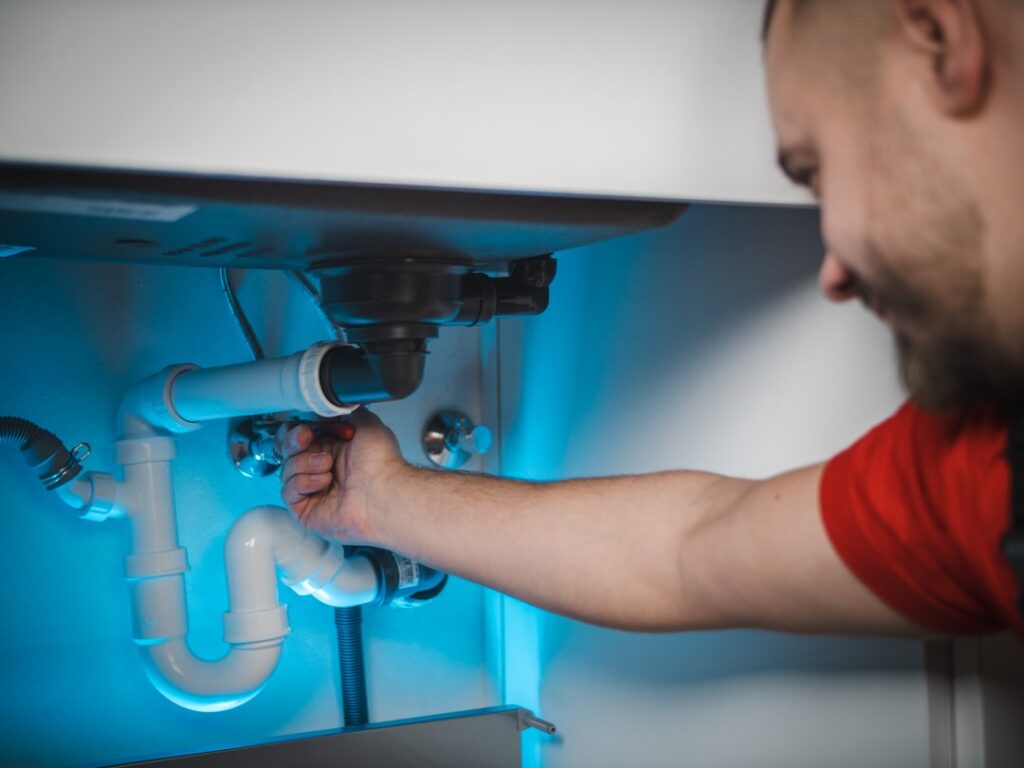
When to Call a Plumber vs Fixing It Yourself: The Quick Answer
Knowing when to call a plumber vs fixing it yourself can save you from costly mistakes, water damage, and safety hazards. Here’s a fast breakdown:
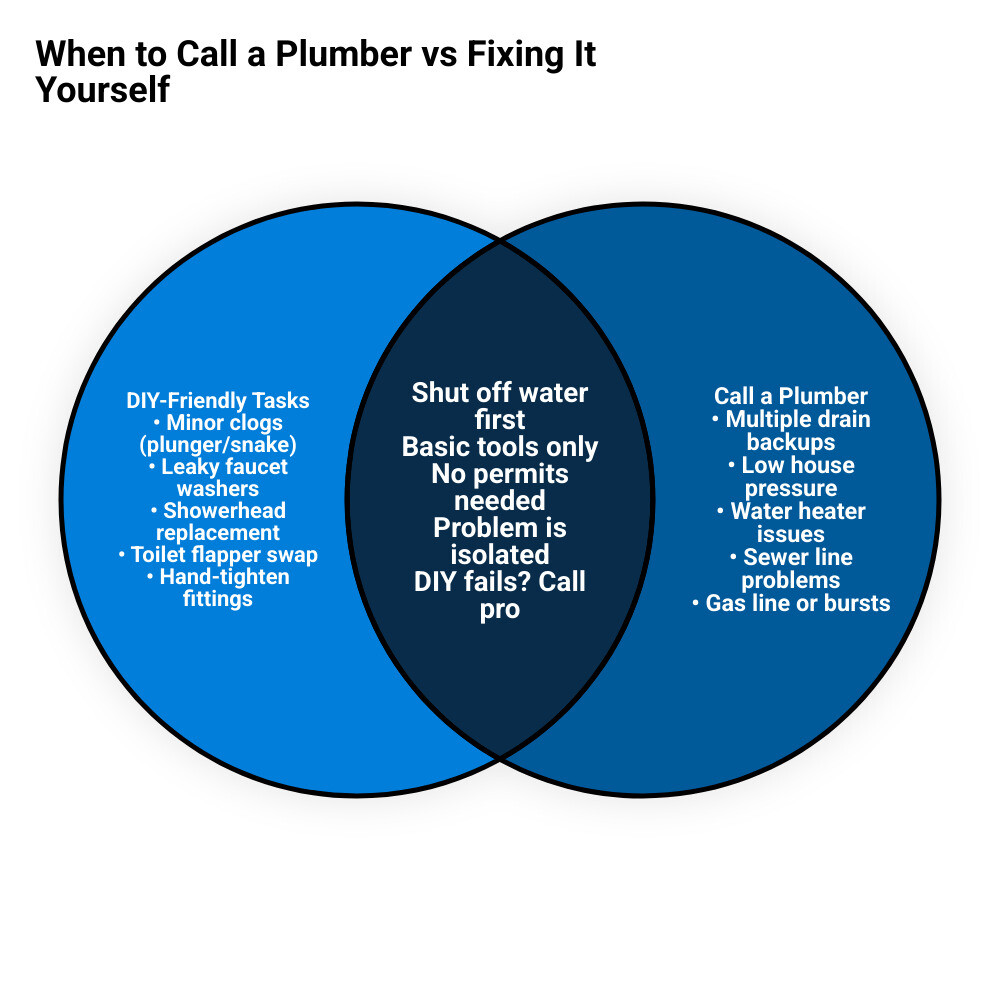
Fix it yourself if:
- The clog clears with a plunger or drain snake
- You’re replacing a showerhead, faucet aerator, or toilet flapper
- You’re tightening a loose fixture handle
- The repair needs only basic tools and no permit
Call a plumber if:
- Multiple drains are backing up at once
- You have low water pressure throughout the house
- Pipes are burst, leaking inside walls, or frozen
- The job involves your water heater, gas line, or sewer line
- A DIY fix didn’t hold or the problem keeps coming back
That’s the short version. But the details matter — because the wrong call in either direction can cost you far more than a service visit.
Every homeowner eventually faces that moment: something’s dripping, gurgling, or just plain wrong — and you’re standing there wondering whether to grab a wrench or grab your phone. It’s a completely normal dilemma. Plumbing repairs range from genuinely simple five-minute fixes to complex jobs that require specialized tools, permits, and years of experience to do safely.
The trouble is, plumbing leaves very little room for error. A small mistake — like using the wrong part, over-tightening a fitting, or misreading the root cause — can quietly turn a minor leak into serious water damage or even a health hazard. Sewer backups alone can cause thousands of dollars in damage when contaminated water reaches your living spaces.
This guide from Don’s Electric & Plumbing Inc. in Canajoharie, NY walks you through exactly which jobs are safe to tackle on your own, which ones need a licensed professional, and how to tell the difference before things get worse.
When to Call a Plumber vs Fixing It Yourself: Identifying DIY-Friendly Tasks
Many homeowners in the Canajoharie and Palatine areas take pride in maintaining their own properties. There is a certain satisfaction in hearing a leak stop after you’ve spent twenty minutes under the sink. However, the first step in successful home maintenance is knowing your limits.
Some tasks are considered “low-risk.” These are generally surface-level repairs where the water supply can be easily shut off, and the parts are standardized. If you make a mistake on these, the worst-case scenario is usually just a bit of spilled water on the floor rather than a flooded basement.
| Task Category | DIY-Friendly | Professional Required |
|---|---|---|
| Drains | Minor sink/tub clogs, cleaning P-traps | Main sewer line backups, multiple slow drains |
| Faucets | Replacing aerators, changing washers/O-rings | Internal valve replacement, hidden pipe leaks |
| Toilets | Replacing flappers, handles, or fill valves | New toilet installation, floor leaks, flange repair |
| Fixtures | Swapping a showerhead, installing a new spout | Relocating pipes, bathtub/shower pan replacement |
| Appliances | Cleaning dishwasher filters | Water heater repair/install, gas line hookups |
When tackling these DIY tasks, remember the “golden rule” of plumbing: hand-tighten first. One of the most common mistakes we see is over-tightened fittings. While you want a secure seal, cranking down too hard with a wrench can strip threads or crack plastic nuts, leading to a much bigger leak later. Using a bit of plumber’s tape (Teflon tape) on threaded metal connections can help create a watertight seal without requiring excessive force.
When to call a plumber vs fixing it yourself for minor drain clogs
Most bathroom sink and shower clogs are caused by a combination of hair buildup and soap scum. If you notice the water is swirling a bit longer than usual, you can likely handle this. A standard plunger is your first line of defense. Ensure there is enough water in the basin to cover the rubber cup, creating a firm seal before you start the forceful pushing and pulling action.
If the plunger doesn’t work, a hand-cranked drain snake (or even a plastic “zip” tool) can often pull out the hair mass. For a more natural approach, try pouring a cup of baking soda followed by a cup of vinegar down the drain. Let it fizz for 15 minutes, then flush with hot water. However, if the clog is deep in the system or affecting multiple rooms, it’s time to put the tools down.
When to call a plumber vs fixing it yourself for leaky faucets
A dripping faucet is often more than just an annoying sound; it’s a waste of gallons of water every day. Most traditional faucets leak because of worn washers or O-rings inside the handle assembly. These are inexpensive parts you can find at any local hardware store.
Before you start, always locate the shut-off valves under the sink and turn them clockwise to stop the water flow. If you have a modern faucet with ceramic plates instead of rubber washers, the repair is slightly more technical. While still DIY-possible, these cartridges are specific to the brand and model. If you find yourself staring at a complex internal assembly you don’t recognize, professional plumbing maintenance is the safest way to ensure the fixture is restored to factory standards without damaging the finish.
Red Flags: When Professional Plumbing is Mandatory
There are moments when “giving it a try” can lead to a disaster. Some plumbing systems are simply too complex or dangerous for anyone without specific training and heavy-duty equipment.
If you experience a sewer backup — where water comes up through the floor drains or toilets when you run the sink — this is a biohazard. These clogs are often caused by tree roots infiltrating older pipes or a collapse in the main line. These situations require high-powered augers or camera inspection tools that homeowners simply don’t have in the garage.
Another major red flag is a persistent “rotten egg” smell. This often indicates a leak in your gas system or a breach in your sewer venting. If you have gas heater inserts or other gas-fired appliances, any odor of gas is an immediate reason to evacuate and call for help.
Water Heater Malfunctions and Safety
The average lifespan of a water heater is about ten years. As they age, sediment buildup at the bottom of the tank can cause the heating elements to burn out or the tank itself to corrode and leak.
Because water heaters involve a combination of high-pressure water and either high-voltage electricity or natural gas, they are not DIY-friendly. A mistake in the pressure relief valve or a gas connection can lead to catastrophic failure. If you have no hot water, hear popping noises from the tank, or see puddles forming at the base of the unit, you need professional furnace and heating support to diagnose whether a repair or a full replacement is necessary.
Complex Installations and Remodeling
Thinking about a kitchen or bathroom refresh? While painting the cabinets is a great weekend project, moving pipes is a different story. Any project that involves pipe rerouting must meet strict local building codes in Montgomery and Schoharie Counties.
Professional plumbers ensure that drainage lines have the correct “slope” to prevent clogs and that the system is properly vented to prevent sewer gases from entering your home. Furthermore, major remodels often require lighting and electrical integration to ensure new appliances like dishwashers or whirlpool tubs are safely grounded and powered.
The Hidden Risks of Improper DIY Repairs
The biggest risk of when to call a plumber vs fixing it yourself isn’t the immediate cost; it’s the “hidden” damage. A DIY repair that looks fine might be slowly weeping water inside a wall.
Consider these potential consequences of a botched repair:
- Structural Damage: A slow leak can rot wooden floor joists and wall studs over months, leading to repairs that cost ten times more than the original plumbing fix.
- Mold Growth: Damp spaces are breeding grounds for mold. Remediation for toxic mold can involve tearing out drywall and professional health remediation services.
- Insurance Voids: Some homeowner’s insurance policies may deny claims for water damage if they discover the work was performed by an unlicensed individual without required permits.
- Electrical Safety Hazards: Water and electricity are a deadly mix. An improperly installed fixture near an outlet or a leak dripping onto electrical panels can cause fires or shocks.
Over-tightened fittings and stripped threads are the hallmarks of an amateur repair. While they might hold for a week, the stressed material can eventually snap when you aren’t home, leading to a flood.
How to Identify and Handle a Plumbing Emergency
A true plumbing emergency demands instant action. A broken washer hose, for instance, can spurt out 500 gallons of water in just one hour. If you walk into your kitchen or basement and find water ankle-deep, follow these steps:
- Shut off the main water valve: Every adult in the house should know where this is located (usually near the water meter or where the main line enters the house).
- Turn off electricity: If water is near outlets or your electrical panel, shut off the power at the breaker if it is safe to reach.
- Call for help: Contact us for emergency plumbing repair immediately.
Other emergencies include a total loss of water during the winter (which could indicate frozen pipes) or the aforementioned “rotten egg” smell of a gas leak. In the case of a suspected gas leak, do not turn any lights on or off, as a single spark could trigger an explosion. Evacuate the house first, then call for help from a safe distance.
Preparing Your Home for a Professional Plumber
Once you’ve decided that the job is too big and you’ve made the call, you can help the process go faster (and save yourself time) by preparing the workspace. Plumbers usually charge by the hour or by the job, and the easier you make it for them to work, the smoother the visit will go.
- Clear the Path: If the leak is under the kitchen sink, remove all the cleaning supplies and sponges from the cabinet.
- Provide Access: If the plumber needs to get to the main stack in the basement, clear away any boxes or storage items blocking the area.
- Contain Pets: Keep dogs and cats in a separate room or a crate. Even the friendliest pet can get underfoot or be startled by the sound of power tools.
- Wipe Spills: If there is standing water, try to soak up what you can with old towels to prevent slips and falls.
- Document the Issue: Before the plumber arrives, take photos or a short video of the leak while it’s happening. This helps us see exactly where the water is coming from, especially if the leak is intermittent.
When you are ready, scheduling an estimate online is the most efficient way to get a pro to your door.
Frequently Asked Questions about When to Call a Plumber
What tools are essential for basic DIY plumbing?
If you want to handle the minor tasks mentioned earlier, your home toolkit should include:
- A high-quality plunger (one for sinks and a “flange” plunger for toilets).
- An adjustable wrench and a basin wrench (for reaching nuts behind sinks).
- Plumber’s tape (Teflon tape) for sealing threads.
- A hand-cranked drain snake (about 25 feet).
- A screwdriver set and a flashlight.
Should I call a plumber to replace a toilet?
While a toilet replacement is a “manageable” DIY task for some, it is surprisingly heavy and fraught with potential errors. A common issue is the wax ring — if it isn’t seated perfectly, the toilet will leak sewer gas or water into your subfloor every time you flush. Furthermore, if your floor is uneven or the flange (the pipe connection in the floor) is cracked or outdated, a professional is needed to ensure a level, leak-free fit.
How can I tell if my low water pressure is a serious issue?
First, check if the problem is only at one faucet. If so, it’s likely just a clogged aerator screen that needs cleaning. If the low pressure is throughout the entire house, check with your neighbors or the municipal supply in Canajoharie or Sharon Springs to see if there is a local water main break. If the rest of the neighborhood is fine, you could have a hidden leak in your main line, a failing pressure regulator, or severely corroded pipes. In these cases, system troubleshooting by a pro is the only way to find the root cause without digging up your yard unnecessarily.
Conclusion
Deciding when to call a plumber vs fixing it yourself is about balancing your desire to save money with the need to protect your home’s value and your family’s safety. Minor clogs and fixture swaps are great ways to learn about your home’s systems, but when it comes to the “vitals” — your main lines, water heater, and gas pipes — there is no substitute for professional expertise.
Don’s Electric & Plumbing Inc. has been a staple of the Canajoharie, NY community since 1984. As a family-owned and operated business, we treat your home like our own. Whether you are in Montgomery, Fulton, Schoharie, or Herkimer County, we stand behind our work with a 100% guarantee.
Don’t let a small drip turn into a major disaster. If you’re second-guessing a repair, give us a call or browse our professional plumbing services to see how we can help you keep your home running smoothly.