



Plumbing Red Flags in Older Homes That Could Cost You Thousands
Plumbing red flags in older homes are warning signs that something in your aging water or drain system is failing — and catching them early can save you from major damage and expensive repairs.
Here are the most common ones to watch for:
- Discolored or rusty water — often a sign of corroding galvanized steel pipes
- Low water pressure — caused by mineral buildup narrowing old pipes from the inside
- Slow drains or gurgling sounds — can indicate main sewer line blockages or pipe bellies
- Sewage odors — a sign of sewer gas leaks, P-trap failure, or venting problems
- Visible wet spots, stains, or mold — evidence of hidden leaks behind walls or under floors
- Old pipe materials — galvanized steel, polybutylene, lead, or clay pipes all carry serious risks
- Shoddy past repairs — mismatched fittings, taped joints, or unpermitted work hiding bigger issues
Older homes have a charm that newer builds simply can’t match. But beneath the original hardwood floors and vintage fixtures, there’s often a plumbing system that was built for a different era — one that wasn’t designed to handle modern water demand, today’s appliances, or decades of wear.
If your home is more than 25 years old, its plumbing system is already in a higher-risk category for blockages, leaks, and failures. Some systems push well past 40 or 50 years with original pipes still in place. That’s when small warning signs start turning into big, costly problems.
The good news? Most of these issues give you clear signals before they become disasters — if you know what to look for.
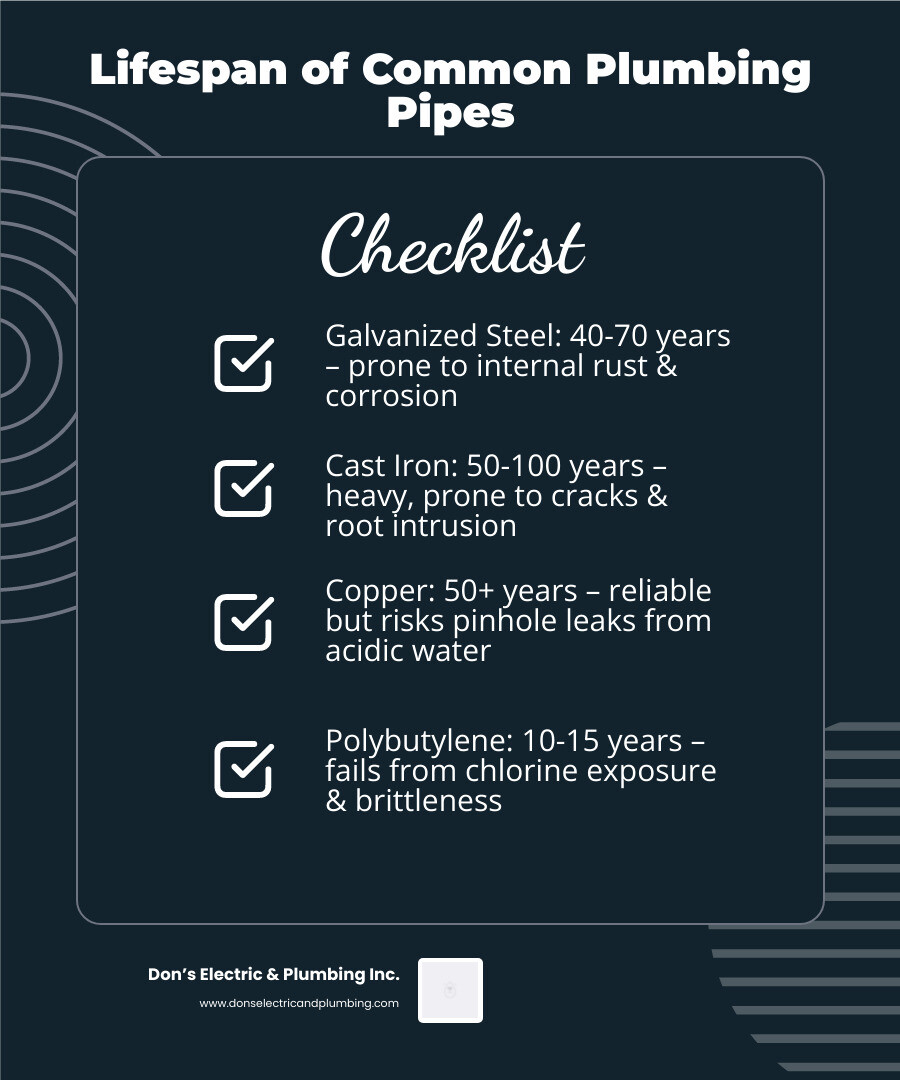
Common Outdated Pipe Materials and Their Risks
When we walk into a historic home in Canajoharie or Sharon Springs, the first thing we look at is the type of pipe material used. In plumbing, age isn’t just a number; it’s a blueprint of potential failure points. Different decades favored different materials, and each comes with its own set of “expiration dates.”
| Pipe Material | Common Era | Lifespan | Primary Risks |
|---|---|---|---|
| Galvanized Steel | Pre-1960s | 40-60 Years | Internal rust, lead release, restricted flow |
| Cast Iron | Pre-1970s | 50-75 Years | Corrosion from inside out, tree root intrusion |
| Copper | 1960s-Present | 70-80+ Years | Pinhole leaks, lead solder (pre-1986) |
| Polybutylene | 1970s-1990s | Variable | Sudden brittleness, cracking from chlorine |
Galvanized Steel and Internal Corrosion
Galvanized steel pipes were once the gold standard. They are steel pipes coated in a layer of zinc to prevent rust. However, over 40 to 60 years, that zinc coating erodes. Once the bare steel is exposed to water, it begins to corrode from the inside out. This creates a “clogged artery” effect where mineral buildup narrows the passage, leading to poor pressure and, eventually, burst pipes.
The Lead Factor and the Safe Drinking Water Act
Before the 1986 Safe Drinking Water Act, lead was commonly used in plumbing, either for entire pipes or as solder to join copper lines. Lead is a heavy metal that can leach into your drinking water, posing significant health risks, especially to children. If your home was built before the mid-80s, there is a high probability that lead is present in some capacity within your system.
Polybutylene: The “Big Mistake” of the 80s
Often found in mobile homes or builds from the late 70s through the early 90s, polybutylene was marketed as the “pipe of the future.” Unfortunately, it reacts poorly to the chlorine used in municipal water treatment. This reaction makes the pipes brittle and prone to sudden, catastrophic failure behind walls or under slabs.
If you suspect your home is running on borrowed time with these materials, our team can help. Learn more about our plumbing services to see how we can modernize your home.
Essential Plumbing Red Flags in Older Homes
Spotting plumbing red flags in older homes requires a bit of detective work. You don’t always need to see a geyser in your living room to know there’s a problem. In fact, the most dangerous issues are the ones that whisper rather than shout.
Persistent Drips and Water Damage
A single faucet dripping once per second can waste over 3,000 gallons of water a year. In an older home, a drip isn’t just annoying; it often indicates that the internal valves or washers are worn out. Even worse are the “silent” drips—leaks behind walls that manifest as sagging floors, peeling wallpaper, or a musty smell. If you notice mold growth in a corner where there’s no window, there is almost certainly a pipe leaking nearby.
Sky-High Water Bills
If your water usage habits haven’t changed but your bill is climbing, your plumbing system is likely hemorrhaging water somewhere you can’t see. In older properties, this often happens in the main supply line or at the toilet flapper. A “running” toilet can waste hundreds of gallons a day, quietly draining your bank account.
Don’t let a small leak turn into a structural disaster. Explore our plumbing repair options to get your system back in tip-top shape.
Identifying Discolored Water as One of the Plumbing Red Flags in Older Homes
When you turn on the tap after a weekend away, do you see a yellow, brown, or reddish tint? That is a classic red flag. This discoloration is usually caused by rust particles flaking off the inside of galvanized steel pipes. As the pipes degrade, they shed sediment into your water supply. While it might clear up after running the tap for a minute, it’s a sign that the structural integrity of your pipes is compromised.
Why Low Water Pressure is Among the Top Plumbing Red Flags in Older Homes
If your morning shower feels more like a light drizzle, you’re likely dealing with narrowed pipes. In older homes, mineral deposits (calcium and magnesium) and rust build up inside the lines over decades. This restricts the flow of water.
A quick way to test this is the “multiple fixture test.” Turn on the kitchen sink and then flush a nearby toilet. If the sink’s flow drops to a trickle, your pipes are either too small for modern demands or are severely restricted by buildup.
Slow Drains and Sewage Odors
In older areas like Palatine or Minden, sewer lines are often made of clay or cast iron. Over time, these pipes can shift, sag, or crack.
- Gurgling Sounds: If your sink “talks” back to you when the toilet flushes, it’s a sign of a venting problem or a partial blockage in the main line.
- Sewage Odors: A persistent “rotten egg” smell means sewer gas is escaping. This could be as simple as a dried-out P-trap in an unused guest bathroom or as serious as a cracked vent pipe inside your walls.
Structural and External Threats to Aging Systems
Sometimes the biggest plumbing red flags in older homes aren’t inside the house at all. They are beneath your yard or under your foundation.
Root Intrusion and Clay Pipes
Before PVC became the standard, sewer lines were often made of clay. These pipes are porous and have joints every few feet. Tree roots are naturally drawn to the moisture and nutrients inside sewer lines. Once a tiny root hair finds a gap, it grows into a massive “root ball” that can completely transition your sewer line into a garden feature, causing constant backups.
Pipe Bellies and Soil Settlement
As a home settles over 50 or 100 years, the ground beneath it moves. This can cause “pipe bellies” or sags. Since drain lines rely on gravity to move waste, a sag creates a standing pool of water and debris. This leads to frequent clogs that even the best plunger can’t fix. This is especially common in homes with Orangeburg pipes—a “bituminous fiber” pipe made of layers of wood pulp and tar that was used mid-century and is notorious for collapsing under pressure.
The Dangers of Shoddy DIY Repairs
Older homes have often passed through many hands, and not all of them were professional. We frequently find “spaghetti junction” piping—a mess of mismatched materials like copper joined to galvanized steel without a proper dielectric union. This causes “galvanic corrosion,” where the two metals react and eat each other away.
Other DIY disasters include:
- Improper Venting: Drains that aren’t vented properly will “glug” and drain slowly.
- Code Violations: Unpermitted work often skips essential safety features, like pressure relief valves on boilers or water heaters.
- Tape-Heavy Joints: If you see joints wrapped in layers of duct tape or excessive “plumber’s putty,” it’s a sign that a previous owner was hiding a leak rather than fixing it.
The Importance of Professional Inspections and Upgrades
If you are buying an older home in Montgomery or Schoharie County, a standard home inspection might not be enough. You need a specialized plumbing audit.
Sewer Camera Inspections
We use high-definition cameras to travel through your sewer line. This is the only way to see if you have a pipe belly, root intrusion, or a collapsing cast iron line before it backs up into your basement. It’s much better to find a crack during an inspection than during a holiday dinner party.
Modern Solutions: PEX and Copper
When it’s time to upgrade, we often recommend PEX (cross-linked polyethylene). It’s flexible, resistant to scale and chlorine, and much less likely to burst in our cold New York winters. For those who prefer traditional materials, modern L-grade copper is incredibly durable and adds significant value to your home.
Water Heater Efficiency
Conventional tank water heaters in older homes typically last 8-12 years. If yours is older, it’s likely filled with sediment, making it work twice as hard to heat half the water. Upgrading to a tankless conversion can provide endless hot water and save space in those tight older basements.
Frequently Asked Questions About Older Home Plumbing
How do I know if my older home has lead pipes?
Lead pipes are typically a dull gray color and are made of very soft metal. You can perform a “key scratch test”—if you scratch the pipe with a house key and it reveals a shiny, silver-colored surface, it is likely lead. Also, look for “wiped” joints, which look like a bulbous, rounded solder joint. If you find these, we highly recommend professional water quality testing.
Are chemical drain cleaners safe for older plumbing?
In short: No. Chemical cleaners create a high-heat chemical reaction to dissolve clogs. In older, thinned-out metal pipes, this heat can actually cause the pipe to crack or eat through the remaining metal. In PVC, it can warp the plastic. It is always safer to use a professional auger or hydro-jetting.
How long do water heaters typically last in older properties?
A standard tank water heater usually lasts about 10 years. In areas with hard water, this can be even shorter. If you hear “popping” or “rumbling” sounds coming from your tank, that’s sediment boiling at the bottom—a clear sign that the unit is near the end of its life.
Conclusion
Owning a piece of history in Canajoharie or the surrounding areas is a rewarding experience, but it requires vigilance. By keeping an eye out for plumbing red flags in older homes, you can protect your investment and ensure your home remains a place of comfort rather than a source of stress.
At Don’s Electric & Plumbing Inc., we’ve been serving our neighbors since 1984. As a family-owned and operated business, we understand the unique challenges of New York’s older infrastructure. Whether you need an emergency repair, a comprehensive inspection, or a full system repipe, we offer a 100% guarantee and financing options to make the process as smooth as possible.
Don’t wait for a leak to become a flood. Schedule an estimate with us today and let our experts give your old home’s plumbing a clean bill of health.