


Why Electrical Safety Tips for Families with Children Could Save a Life
Electrical safety tips for families with children are something every parent needs to know — because the risks are closer than most people think.
Here’s a quick overview of the most important steps:
- Cover all outlets with tamper-resistant receptacles (TRRs) or safety plugs
- Keep cords out of reach and replace any that are frayed or damaged
- Install GFCI outlets in kitchens, bathrooms, and anywhere near water
- Never charge devices on beds or under pillows — always use hard surfaces
- Teach kids to stay away from power lines, utility poles, and substations
- Check smoke and carbon monoxide detectors monthly and practice a fire escape plan
- Unplug appliances when not in use, and never overload outlets or power strips
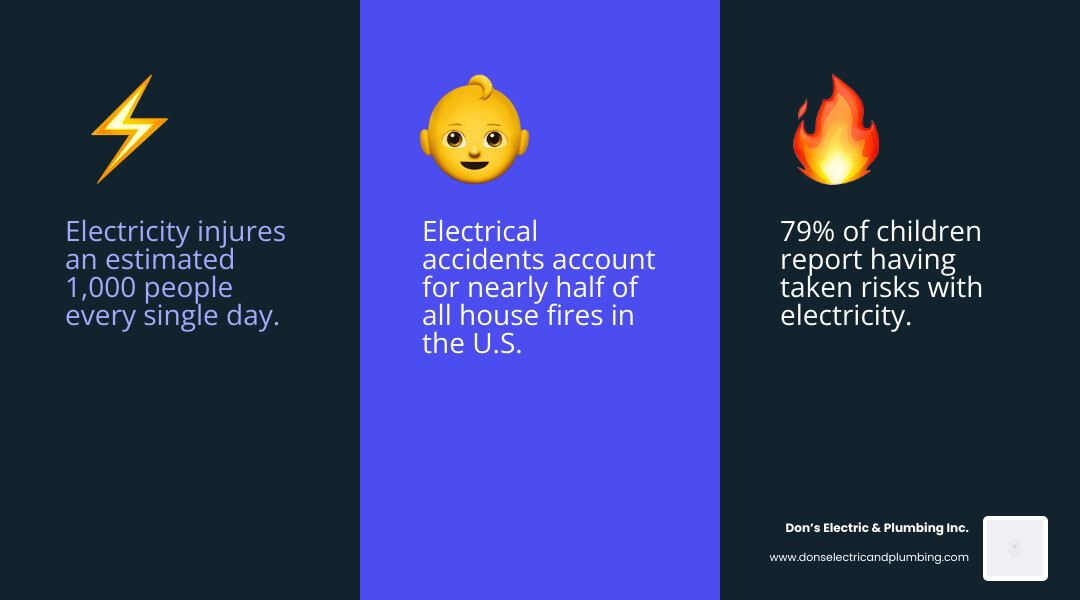
Electricity injures an estimated 1,000 people every single day. And here’s the part that should give every parent pause: 79% of children report having taken risks with electricity. At the same time, kids’ rooms now average around 10 electrical devices — 25% more than their parents’ generation grew up with. More devices means more cords, more outlets in use, and more chances for something to go wrong.
Children are naturally curious. To them, an outlet is an interesting hole in the wall. A dangling cord is something to grab. They don’t see danger — they see something new to explore. That’s not a flaw; it’s just how kids learn. But it means the responsibility falls on us as adults to make our homes as safe as possible before an accident happens.
Electrical accidents also account for nearly half of all house fires in the U.S. That means childproofing your electrical system isn’t just about preventing shocks — it’s about protecting your whole family from fire.
At Don’s Electric & Plumbing Inc., we believe every family in Canajoharie deserves a home that’s both safe and functional. The tips and guidance in this article will help you get there.
Essential Electrical Safety Tips for Families with Children
When we think about childproofing, we often think of cabinet locks and baby gates. However, the electrical system is just as important. Small children, especially toddlers, explore with their hands and mouths. To a two-year-old, a shiny fork looks like the perfect tool to “investigate” those two little slots in the wall.
The Power of Tamper-Resistant Receptacles (TRR)
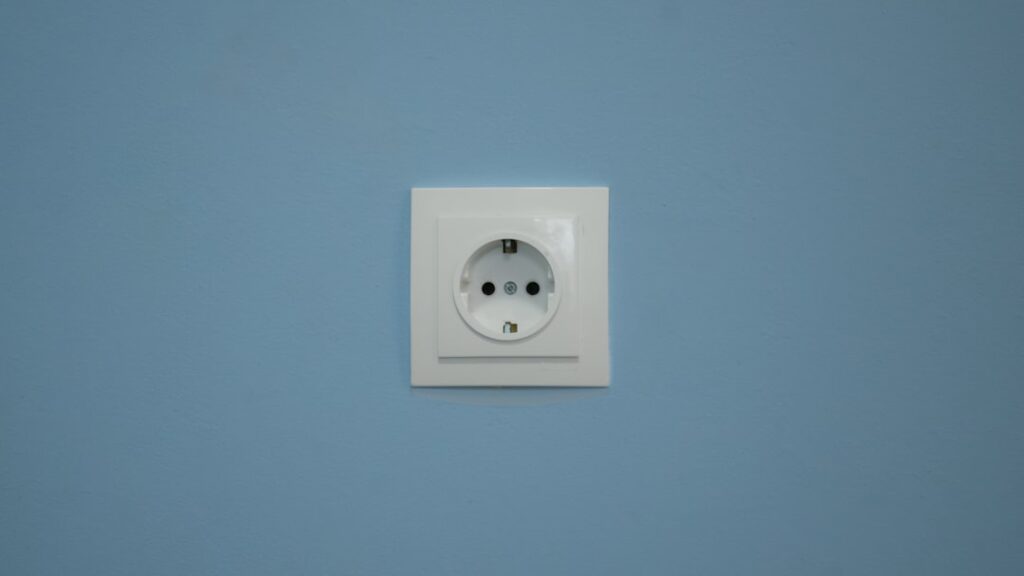
The gold standard for outlet safety is the Tamper-Resistant Receptacle (TRR). Unlike the plastic “plugs” that parents have used for decades, TRRs have built-in safety shutters. These shutters only open when equal pressure is applied to both slots simultaneously — like when you’re plugging in a lamp. If a child tries to poke a paperclip or a toy into just one side, the shutter stays closed, preventing a dangerous shock.
In fact, TRRs have been proven to prevent thousands of injuries every year. If your home in Montgomery County was built before 2008, you might still have older, non-protected outlets. Upgrading to TRRs is one of the most effective electrical installation services you can invest in for your peace of mind.
Outlet Covers and Sliding Plates
If you aren’t ready for a full outlet upgrade just yet, you can use high-quality outlet covers. We recommend the sliding plate covers over the individual plastic plugs. Why? Because curious toddlers have been known to pull those plastic plugs out (and then put them in their mouths, creating a choking hazard). Sliding plates automatically snap shut the moment a cord is unplugged, ensuring the outlet is never left exposed.
Mastering Cord Management
Cords are a triple threat: they are a tripping hazard, a strangulation risk, and an irresistible “chew toy” for pets and toddlers.
- Keep them hidden: Use cord shorteners or fasteners to keep extra length from dangling off tables.
- Furniture placement: Whenever possible, push heavy furniture in front of outlets to block access entirely.
- Check for damage: Regularly inspect your cords. If you see fraying, exposed wires, or scorch marks, throw the device away or have it repaired immediately. Never try to “fix” a frayed cord with electrical tape; it’s a temporary patch, not a safety solution.
Professional Inspections
Sometimes the biggest dangers are the ones we can’t see. Aging wiring, loose connections behind the wall, or an overloaded breaker panel can all lead to electrical fires. Having a licensed professional perform a comprehensive safety assessment is the best way to catch these “hidden” hazards before they become emergencies.
Preventing Hazards in the Kitchen and Bathroom
Water and electricity are a lethal combination. In areas like the kitchen, bathroom, and laundry room, the risk of a “ground fault” (where electricity takes a shortcut to the ground through a person) is much higher.
The Life-Saving GFCI
A Ground Fault Circuit Interrupter (GFCI) is a special type of outlet designed specifically for wet areas. It monitors the flow of electricity and, if it detects even a tiny “leak” of current, it shuts off the power in a fraction of a second. This is fast enough to prevent a deadly shock.
Current electrical codes require GFCIs in:
- Bathrooms
- Kitchens (near sinks and countertops)
- Garages
- Unfinished basements
- Outdoor receptacles
If your kitchen or bathroom lacks these buttons (usually labeled “Test” and “Reset”), it’s time to call for plumbing repair or electrical upgrades to ensure your family is protected. Since we handle both plumbing services and electrical work, we often see how these two systems interact in the home.
Safe Appliance Habits
- The “Dry Hands” Rule: Teach your children from a very young age that they must never touch a light switch, a hairdryer, or a toaster if their hands are wet.
- Unplug After Use: Small appliances like toasters and hair straighteners should be unplugged when not in use. A toaster left plugged in is a curiosity; a toaster with a fork stuck in it is a tragedy.
- Clear the Counters: Keep electrical cords for slow cookers or mixers pushed back toward the wall so a child can’t reach up and pull a heavy, hot appliance down onto themselves.
Safe Charging Habits and Bedroom Electrical Safety Tips for Families with Children
The modern kid’s bedroom is a high-tech hub. Between tablets, phones, gaming consoles, and laptops, there is a lot of power flowing into one small space.
Preventing Device Overheating and Fire
Many of the electrical safety tips for families with children we share involve how we charge our gadgets.
- Hard Surfaces Only: Tablets and phones generate heat while charging. They should always be placed on a hard, flat surface like a desk or nightstand.
- The Bedding Danger: Never allow your child to charge their phone on their bed, under a pillow, or tucked into a pile of laundry. Bedding acts as insulation, trapping the heat. This can cause the battery to overheat, catch fire, and ignite the mattress in seconds.
- Use Branded Chargers: It’s tempting to buy the cheap $5 charging cables from the gas station, but “bargain-basement” chargers often lack the safety chips required to prevent overcharging and overheating. Always use chargers that are UL or CSA certified.
Managing Electronics in Kids’ Bedrooms
With an average of 10 devices per room, cable management is key.
- Dust-Free Zones: Dust is flammable and can block the vents on gaming consoles like PlayStations or Xboxes. Teach your kids to keep their gaming areas tidy and dust-free to prevent overheating.
- LED Night Lights: If your little one needs a night light, choose LED versions. They remain cool to the touch and don’t have exposed bulbs that can get hot enough to scorch nearby curtains or bedding.
- Furniture Safety: Ensure that heavy TVs or stereo equipment are pushed back against the wall or, ideally, anchored to the wall. This prevents children from reaching behind the equipment where the wires live.
If you’re looking to update the atmosphere while keeping things safe, our lighting services can help you choose the right fixtures for a child-friendly space. For general concerns about your home’s power load, our electrical services team is always available to help.
Teaching Outdoor Electrical Safety Tips for Families with Children
Safety doesn’t stop at the front door. The world outside is full of high-voltage equipment that can be enticing to an imaginative child.
Recognizing Danger Outside the Home
Children often don’t see a utility pole as a danger; they see it as a ladder. They don’t see a green transformer box as a high-voltage hazard; they see it as a perfect “base” for a game of tag.
- Power Lines: Teach children that overhead lines are “live” and deadly. Never climb trees that are near power lines. Even if the branches aren’t touching the wire now, the weight of a child can cause the branch to sag and make contact.
- Substations: These are fenced-off areas filled with high-voltage equipment. If a ball or a pet goes over the fence, children must never try to climb in. Instead, an adult should call the local utility company for help.
- Kites and Drones: Only fly kites or drones in large, open fields away from power lines. If a kite gets stuck in a wire, let go of the string immediately. Electricity can travel down the string and cause a fatal shock.
| Hazard | Indoor Risk | Outdoor Risk |
|---|---|---|
| Outlets | Sticking objects inside | N/A |
| Water | Sinks, tubs, spilled drinks | Puddles, pools, rain |
| Wires | Frayed cords, chewing | Downed power lines |
| Equipment | Toasters, hair dryers | Transformers, substations |
Age-Appropriate Safety Education
Education shouldn’t be a one-time “scary talk.” It should be an ongoing conversation.
- For Toddlers: Use simple “No” and “Hot” commands. Cover outlets and keep cords hidden.
- For School-Aged Kids: Explain how electricity works. Use characters like “P.I. Plug” to make it engaging. Show them how to safely pull a plug by the base, not the cord.
- For Teens: Focus on charging safety and the dangers of using electronics near the bathtub or pool.
If you’re spending more time outdoors, ensure your AC service includes a check of the outdoor condenser unit to ensure it’s properly protected from curious hands.
Emergency Preparedness and Appliance Maintenance
Even with the best electrical safety tips for families with children, emergencies can happen. Being prepared is the difference between a close call and a catastrophe.
Smoke and Carbon Monoxide Detectors
Working detectors are your family’s first line of defense.
- Test Monthly: Press the button once a month to ensure the siren is working.
- Change Batteries: Do this every six months (a good rule of thumb is to do it when the clocks change).
- Placement: You should have at least one smoke detector on every level of your home, inside every bedroom, and outside every sleeping area.
Fire Escape Plan
Does your family have a plan? You should have two ways out of every room. Practice this plan with your children until they can do it in the dark. Remind them to “get low and go” to avoid smoke inhalation.
HVAC and Appliance Maintenance
A dusty furnace or a clogged dryer vent is a major fire hazard. Regular furnace service ensures that your heating system isn’t working too hard and creating an electrical strain. We highly recommend signing up for an HVAC maintenance plan to keep your systems running safely year-round in the New York climate.
Frequently Asked Questions about Childproofing Electricity
How do I know if my outlets are tamper-resistant?
Look closely at the face of the outlet. Most TRRs will have the letters “TR” stamped somewhere on the plastic. You can also look inside the slots; if you see opaque plastic shutters blocking the holes, it’s a tamper-resistant model.
What should I do if my child gets an electric shock?
- Don’t touch them yet: If they are still in contact with the source, you could be shocked too.
- Turn off the power: Pull the plug or flip the main breaker at the electrical panel.
- Call 911: Even if they seem fine, electricity can cause internal damage that isn’t immediately visible.
- Check vitals: If they aren’t breathing or have no pulse, begin CPR immediately while waiting for help.
Are plastic outlet plugs better than built-in covers?
Built-in covers (like TRRs or sliding plates) are much safer. Plastic plugs are a choking hazard and are often forgotten or left out after an adult uses the outlet. Built-in solutions are “always on” and can’t be misplaced.
Conclusion
At Don’s Electric & Plumbing Inc., we’ve been serving the Canajoharie area and surrounding communities like Palatine, Minden, and Sharon Springs since 1984. As a family-owned and operated business, we know that nothing is more important than the safety of your “little ones.”
Whether you need to upgrade your outlets to tamper-resistant models, install GFCIs in your kitchen, or simply want a professional to walk through your home and identify potential risks, we are here to help. We offer emergency services and a 100% guarantee on our work, ensuring your home remains a safe haven for your family to grow.
Don’t wait for a “spark” to remind you about safety. Schedule an electrical safety estimate with us today and let’s make your home as safe as it can be.