


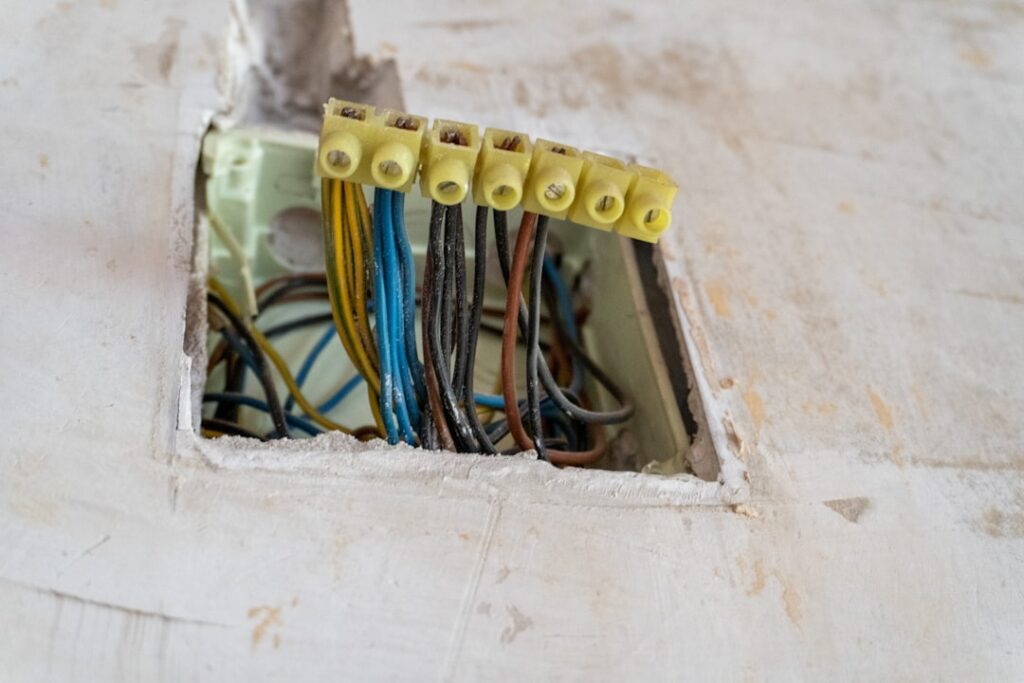
Is Your Home’s Electrical System Trying to Tell You Something?
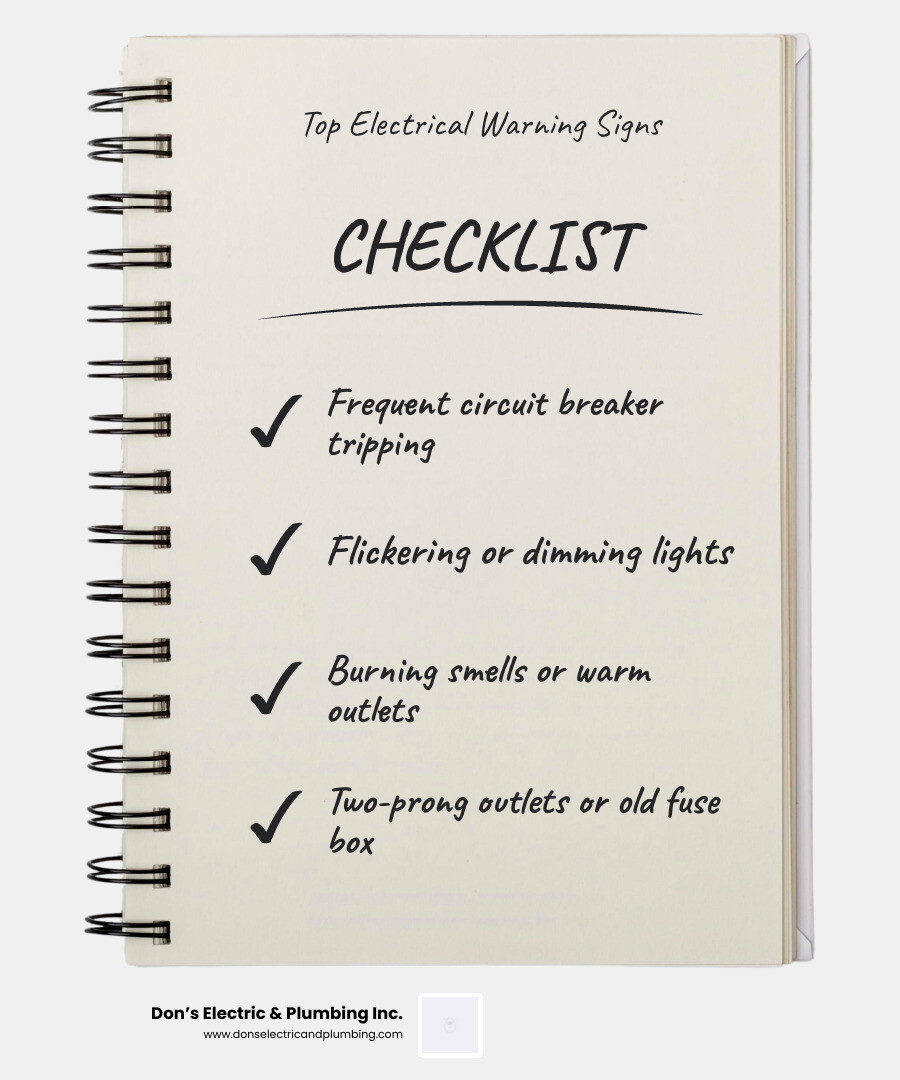
Signs your home needs an electrical upgrade are easy to miss — until something goes wrong. Here’s a quick look at the most common warning signs:
- Circuit breakers that trip frequently
- Flickering or dimming lights
- Burning smells or discolored outlets
- Buzzing or humming from your electrical panel
- Warm switch plates or outlet covers
- Heavy reliance on extension cords and power strips
- Two-prong (ungrounded) outlets throughout the home
- A fuse box or panel that’s 25+ years old
- Scorch marks near outlets or the panel
- Insufficient power for modern appliances or new additions
Your home’s electrical system quietly powers everything you rely on every day. But like any system, it ages — and older wiring wasn’t designed to handle the demands of modern life. Today’s homes run air conditioners, EV chargers, home offices, and a growing list of smart devices all at once. When your electrical system can’t keep up, it doesn’t just become inconvenient. It becomes dangerous. According to national data, more than 50,000 electrical fires occur in the United States each year, with arcing faults alone responsible for around 28,000 of those fires. If your home is more than 30 years old and hasn’t had an electrical inspection, there’s a good chance your system is working harder than it should — and showing signs of it.
10 Critical Signs Your Home Needs an Electrical Upgrade
Think of your home’s electrical system like a nervous system. The electrical panel is the “brain,” directing power through the “nerves” (wiring) to every corner of your house. When that brain is overwhelmed or the nerves are frayed, the symptoms start appearing. Here in Montgomery and Schoharie Counties, many of our beautiful historic homes are still running on systems meant for a different era.
1. Frequent Circuit Breaker Tripping
Circuit breakers are safety devices designed to “trip” and shut off power when a circuit is overloaded. If you find yourself walking to the basement or garage to flip a switch every time you use the microwave and the toaster simultaneously, your system is telling you it’s at capacity. Constant tripping isn’t just an annoyance; it’s a sign that your panel can no longer manage the voltage your family requires.
2. Flickering or Dimming Lights
Do your lights dim when the refrigerator kicks on or when you start the vacuum? This usually happens because those large appliances are drawing a massive amount of “startup” current, leaving the rest of the circuit starved for power. While a slight flicker might seem like a ghost in the machine, it’s actually a sign of an overloaded circuit or aging wiring that can’t maintain a steady flow.
3. Burning Smells Near Outlets or the Panel
This is an absolute “stop what you are doing” moment. If you smell something akin to burning plastic or an ozone-like scent near an outlet or your service panel, it indicates that wires are overheating and melting their insulation. This is a primary precursor to a house fire and requires immediate professional attention.
4. Discolored Outlets and Scorch Marks
Take a close look at your wall outlets. Do you see any brownish or blackish discoloration? These are scorch marks caused by “arcing”—when electricity jumps across a gap in damaged or loose wiring. This generates intense heat. If an outlet is discolored, stop using it immediately and contact our experts for electric service in Canajoharie, NY.
5. Unusual Buzzing or Humming Noises
A healthy electrical system should be silent. If you hear a light buzzing, crackling, or humming sound coming from your outlets, switches, or the electrical panel itself, it often means there is a loose connection or a failing component. Electricity “struggling” to make a connection often manifests as these audible warnings.
6. Warm Switch Plates or Outlet Covers
While some electronics (like a dimmer switch) might feel slightly warm to the touch, your standard outlet covers and switch plates should always be cool. If they feel hot, it’s a sign that the wiring behind the wall is under too much stress or is improperly installed.
7. Heavy Reliance on Extension Cords
Extension cords are meant for temporary use—think Christmas lights or a weekend project. If your living room looks like a web of orange and white cords because there aren’t enough outlets, you are likely overloading the few outlets you do have. This is a major fire hazard and a clear indicator that your home needs more dedicated circuits.
8. Power Strip Overuse
Similar to extension cords, “daisy-chaining” power strips (plugging one into another) is a recipe for disaster. Modern home offices and entertainment centers demand a lot of power. If you’re relying on strips to power your entire setup, it’s time to consider an upgrade to your home’s permanent wiring.
9. Two-Prong Outlets and Lack of Grounding
If your home still has two-prong outlets, it means your system is ungrounded. Grounding provides a safe path for excess electricity to travel into the earth during a surge. Without it, that excess energy could go through your expensive electronics—or through you. Replacing these with three-prong, grounded outlets is a vital safety step.
10. Physical Damage to the Panel
Rust, corrosion, or water spots on your electrical panel are major red flags. Since the panel is made of metal and houses live electricity, moisture is its greatest enemy. Corrosion can lead to poor connections and catastrophic failure.
Outdated Panels and Dangerous Wiring Types
The average electrical panel is designed to last between 25 and 40 years. If your home was built before the mid-1980s and the panel hasn’t been touched, you are likely overdue for a replacement. Beyond just age, there are specific types of systems that are now considered safety hazards.
The Problem with Fuse Boxes
Found mostly in homes built before 1960, fuse boxes use small glass fuses that “blow” when overloaded. While they were effective for the 60-amp service common in the 1950s, they weren’t designed for today’s 200-amp standard. Often, homeowners in places like Sharon Springs or Little Falls might find themselves putting in a larger fuse to stop it from blowing—a dangerous move that can lead to overheated wires and fires.
Hazardous Panel Brands: Federal Pacific and Zinsco
There are two specific brands that every homeowner should check for: Federal Pacific Electric (FPE) and Zinsco. These panels were popular in the 1960s and 70s but are now known to have a significant design flaw: the breakers often fail to trip during an overload. This means the power keeps flowing even when it shouldn’t, leading to melted wires and house fires. Many insurance companies will no longer even cover a home that has an FPE or Zinsco panel.
Dangerous Wiring: Knob-and-Tube and Aluminum
If you live in an older home in the Mohawk Valley, you might still have knob-and-tube wiring (pre-1950s) or aluminum wiring (1960s-70s).
- Knob-and-Tube: Lacks a grounding wire and uses cloth insulation that becomes brittle and falls off over time.
- Aluminum Wiring: Unlike copper, aluminum expands and contracts significantly when heated. This causes connections at outlets and switches to loosen over time, creating “arcing” faults that cause roughly 28,000 fires annually.
If you suspect your home has these outdated materials, it’s time to look into professional electric installation in Canajoharie, NY to bring your home up to modern safety standards.
| Feature | Fuse Box (Pre-1960) | Modern Circuit Breaker Panel |
|---|---|---|
| Safety Mechanism | Fuses must be replaced | Breakers can be reset |
| Typical Capacity | 30–60 Amps | 100–200+ Amps |
| Modern Compliance | Generally non-compliant | Meets NEC standards |
| Fire Risk | High (if oversized fuses used) | Low (designed to trip instantly) |
| Expandability | Very limited | Easy to add new circuits |
Upgrading for Renovations and Modern Demands
Sometimes, you don’t need an upgrade because something is broken, but because you’re moving forward. If you’re planning a major home project, your electrical system needs to be part of the conversation.
Home Additions and Kitchen Remodels
Modern kitchens are power-hungry. Between the dishwasher, microwave, convection oven, and high-end refrigerator, a standard 100-amp panel often won’t cut it. Most modern homes with central air conditioning now require a 200-amp service to operate safely. If you are adding a new room or upgrading your kitchen, you’ll likely need to add dedicated circuits to meet the National Electrical Code (NEC).
The “Summer Strain” and New Appliances
Installing a new HVAC system is a great way to improve comfort, but it places a massive new load on your panel. Before you commit to an AC installation service in Canajoharie, NY, have an electrician ensure your panel can handle the amperage. The same applies to hot tubs, chest freezers, or electric clothes dryers.
Future-Proofing with EV Chargers and Smart Tech
The world is going electric. Whether it’s an Electric Vehicle (EV) charger in the garage or a whole-home automation system, these technologies require stable, high-capacity power. Upgrading to a 200-amp (or even 400-amp for larger homes) panel now ensures that you won’t have to redo the work in five years when you buy your first electric car.
Frequently Asked Questions About Home Electrical Systems
What are the most common signs your home needs an electrical upgrade?
The most common signs include frequent circuit breaker trips, lights that flicker or dim when you turn on a vacuum or hair dryer, and a heavy reliance on power strips and extension cords. If your outlets are warm to the touch or you see any discoloration (scorch marks), your system is likely overloaded and struggling to keep up with modern energy demands. Regular maintenance and being aware of these sensory signs can save you from a major electrical failure. You can also use our SEER AC energy savings calculator to see how modern, efficient appliances might impact your energy usage.
Is your panel showing signs your home needs an electrical upgrade?
Check your panel for physical signs like rust, corrosion, or water damage. If you hear buzzing or crackling sounds coming from the box, that’s a sign of arcing or loose connections. Additionally, if your panel is over 25 years old or still uses fuses instead of breakers, it likely doesn’t have the amperage capacity required for modern life. Most older homes have 60-100 amp service, whereas 200 amps is the current standard for an average family home.
What is the difference between a panel upgrade and a full home rewiring?
A panel upgrade (often called a “heavy-up”) involves replacing your service panel and service entrance cables to increase capacity (e.g., going from 100 to 200 amps). A full home rewiring is much more extensive; it involves replacing all the actual wires inside your walls, along with all outlets and switches. You usually need a panel upgrade if you’re adding new appliances, but you may need a full rewire if your home has dangerous, outdated wiring like knob-and-tube or aluminum. A professional inspection is the only way to know for sure which one is right for your home.
Conclusion
Don’t wait for a spark to tell you that your home is struggling. At Don’s Electric & Plumbing Inc., we’ve been helping our neighbors in Montgomery, Schoharie, Herkimer, and Fulton Counties stay safe since 1984. As a family-owned and operated business, we understand that your home is your sanctuary. Whether you’re in Canajoharie, Sharon Springs, or Little Falls, we offer a 100% guarantee on our work, 24/7 emergency services for those middle-of-the-night scares, and financing options to make your safety upgrades affordable.
Ready to ensure your home is up to code and ready for the future? Schedule an estimate for your electrical upgrade with us today!