


Why Knowing How to Spot Electrical Problems Before They Become Dangerous Could Save Your Home
Knowing how to spot electrical problems before they become dangerous is one of the most important things you can do as a homeowner. Electrical malfunctions cause more than 50,000 house fires every year in the United States, according to the Electrical Safety Foundation International. Most of those fires were preventable.
Here are the most common warning signs to watch for:
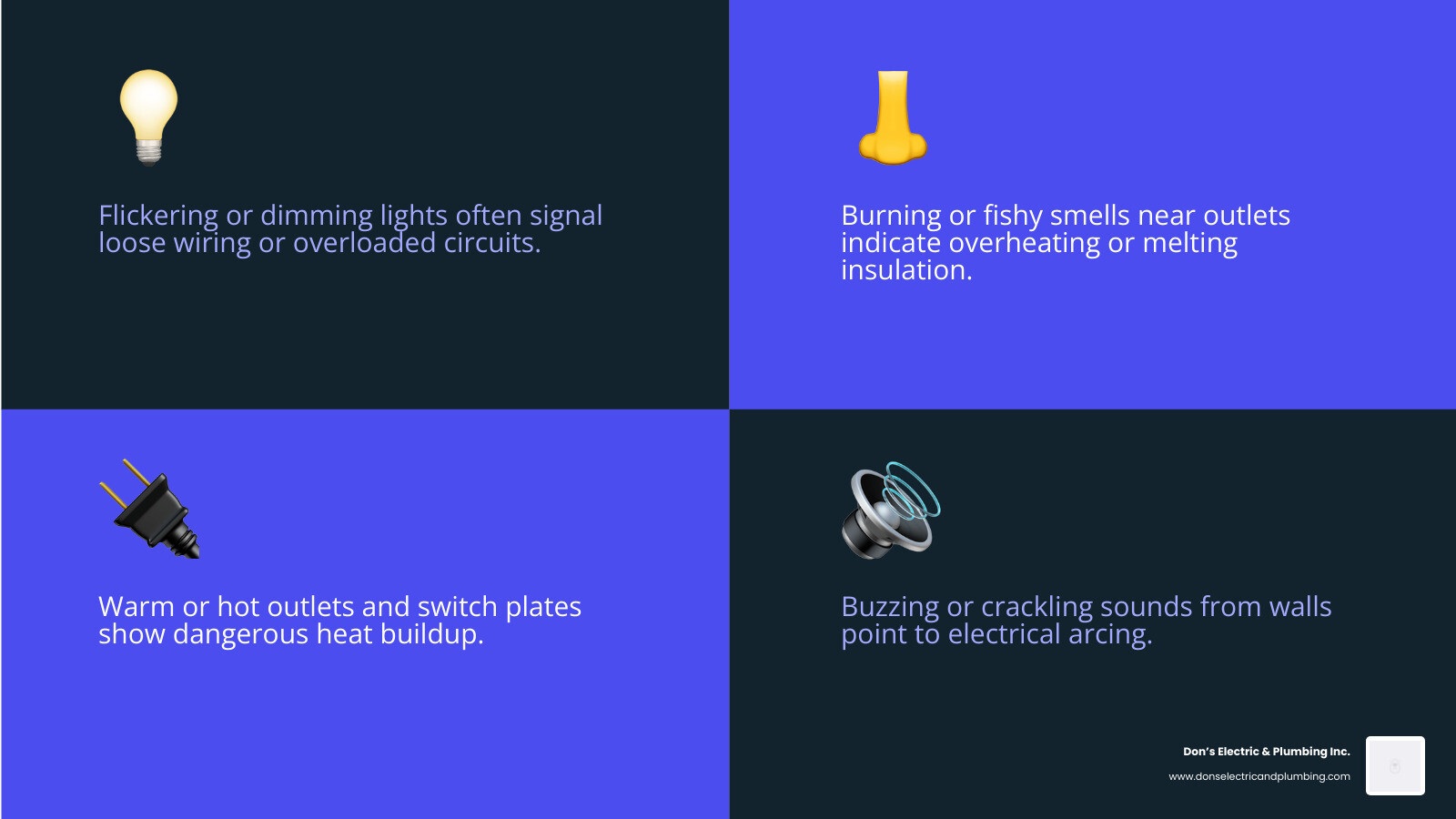
- Flickering or dimming lights – often signals loose wiring or an overloaded circuit
- Burning or fishy smell near outlets – indicates overheating or melting insulation
- Frequently tripping circuit breakers – suggests the circuit is overloaded or has a wiring fault
- Warm or hot outlets and switch plates – a sign of dangerous heat buildup
- Buzzing or crackling sounds from walls or outlets – points to electrical arcing
- Scorch marks or discoloration on outlets – evidence of past arcing or overheating
- Mild shocks when touching appliances – indicates a grounding problem
- Dead outlets – may point to wiring failure or a tripped GFCI
The trouble with electrical problems is that most of them hide inside your walls, quietly getting worse. By the time you see smoke or flames, it’s already too late. But your home almost always gives you early warning signs — you just need to know what to look for.
Common Warning Signs of Home Electrical Issues
When it comes to your home’s electrical system, your house has its own way of “talking” to you. The problem is that many of us ignore these whispers until they become screams. At Don’s Electric & Plumbing Inc., we’ve seen how small issues—like a single flickering bulb or a faint scent—can escalate into a $1 billion annual damage statistic if left unchecked.
How to spot electrical problems before they become dangerous using your senses
You don’t need a degree in electrical engineering to perform a basic safety sweep. You just need your eyes, ears, nose, and hands.
- The Nose Knows: If you smell something “fishy” or a sharp, acrid plastic scent near an outlet, don’t go looking for a lost tuna sandwich. This is often the smell of heat-resistant plastic components or wire insulation melting.
- Listen Closely: Electricity should be silent. If you hear buzzing, humming, or crackling coming from a switch or inside a wall, you’re likely hearing “arcing.” This happens when electricity jumps across a gap in a loose connection, creating intense heat.
- The Eye Test: Look for scorch marks. Any brown or black discoloration on an outlet or switch plate is a major red flag. It means the outlet has already experienced a mini-fire or significant overheating.
- The Touch Test: Carefully place the back of your hand near an outlet or switch plate. It should be room temperature. If it feels warm or hot, the wiring behind it is struggling with resistance, which is a leading cause of electrical fires.
If you notice any of these sensory red flags, it’s time to look into professional lighting services or a general system checkup to ensure your home remains a safe haven.
Understanding the danger of flickering or dimming lights
We’ve all seen it: you turn on the vacuum or the microwave, and the living room lights take a quick dip. While a momentary flicker might seem like a minor quirk of an older home, it often indicates that your system is being pushed to its limit.
Flickering usually stems from one of three issues:
- Circuit Overloading: The appliance is drawing more current than the circuit can comfortably provide.
- Loose Connections: Wiring may have wiggled loose at the breaker or the fixture itself, causing intermittent power flow.
- Voltage Fluctuations: This can be a sign of a failing transformer or issues with the main service line entering your home.
Ignoring these signs can lead to damaged appliances or, worse, an electrical fire. If your lights are constantly putting on a light show, you may need a dedicated circuit or a modern electric installation to handle today’s high-powered gadgets.
Identifying Hazards in Outdated Wiring and Panels
In areas like Canajoharie and Sharon Springs, we have beautiful historic homes. However, those historic charms often come with historic hazards. If your home was built before the 1970s, you might be sitting on a “dangerous secret” hidden behind your drywall.
Why outdated components make it harder to spot electrical problems before they become dangerous
Older wiring systems weren’t designed for the “energy-hungry” lifestyle of the 21st century. Back in the day, a home might have had a few lamps and a radio. Today, we have 4K TVs, electric vehicle chargers, and high-powered HVAC systems.
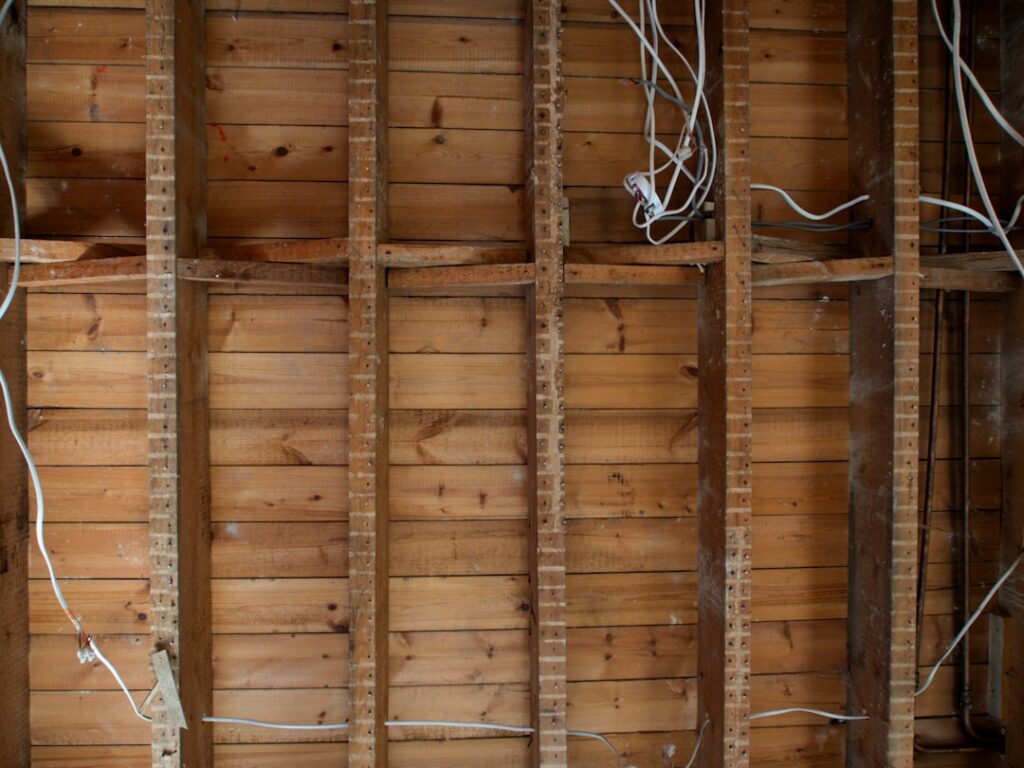
- Knob-and-Tube Wiring: Common before the 1940s, this system lacks a ground wire. It uses ceramic knobs and tubes to run wires through joists. The danger arises when homeowners bury this wiring in modern insulation, which causes it to overheat because it can’t dissipate heat properly.
- Aluminum Wiring: Popular in the late 60s and early 70s, aluminum wiring is statistically 55 times more likely to suffer fire damage than copper. Why? Because aluminum expands and contracts more than copper when it gets hot. Over time, this “breathing” loosens the connections at outlets and switches, leading to dangerous arcing.
| Feature | Copper Wiring | Aluminum Wiring |
|---|---|---|
| Fire Risk | Low | High (55x more likely to fire) |
| Durability | High | Brittle over time |
| Expansion | Stable | Significant (loosens connections) |
| Modern Standard | Yes | Generally discouraged |
If you’re worried about what’s lurking in your walls, our electric service team can perform an inspection to see if it’s time for a copper upgrade.
The specific risks of Federal Pacific and Zinsco panels
Your electrical panel is the “nerve center” of your home. It’s supposed to be the ultimate safety net. If a circuit draws too much power, the breaker trips to prevent a fire. However, certain brands—most notably Federal Pacific (FPE) and Zinsco—are notorious for failing to trip.
These panels can stay “on” even during a massive surge, allowing wires to melt and ignite. Many insurance companies will actually deny coverage or cancel policies if they discover an FPE panel in the home. Proactive upgrades aren’t just about safety; they’re about protecting your home’s value and insurability.
How to Spot Electrical Problems Before They Become Dangerous: A Homeowner’s Checklist
Safety shouldn’t be a guessing game. We recommend a monthly walk-through of your home to check for these common issues. Catching a “dead” outlet or a warm switch plate today can prevent a call to emergency plumbing repair or electrical services later when a fire triggers your sprinkler system or causes catastrophic damage.
Testing GFCI and AFCI protection
Ground Fault Circuit Interrupters (GFCIs) are those outlets with the “Test” and “Reset” buttons. You’ll usually find them in kitchens, bathrooms, and garages—anywhere water is present. They are designed to shut off power in a fraction of a second if they detect electricity flowing through water (or a person).
Arc Fault Circuit Interrupters (AFCIs) do something different; they detect the “sparking” or arcing mentioned earlier and shut down the circuit before a fire starts.
- The Test: Once a month, press the “Test” button on your GFCIs. The “Reset” button should pop out, and power should cut off. If it doesn’t, the outlet is faulty and provides zero protection against electrocution.
Monitoring circuit breaker behavior
A circuit breaker that trips once a year might just be a fluke. A breaker that trips once a week is a warning.
- Frequent Trips: This usually means the circuit is overloaded. You might have too many appliances (like a space heater and a hairdryer) on one line.
- The “Short” Sign: If a breaker trips immediately after you reset it, do not try again. This indicates a “short circuit” or a direct wiring fault.
- Panel Warmth: Touch the door of your breaker panel. It should be cool. If it feels warm, the bus bar or the breakers themselves are failing.
Immediate Actions and Preventive Maintenance
If you find yourself in a situation where you smell smoke or see sparks, do not wait.
- Shut off the power: If it’s safe to reach, go to your main panel and flip the “Main” breaker to the OFF position. This kills power to the entire house.
- Unplug the culprit: If the smell is coming from a specific appliance, unplug it immediately.
- Call the pros: Electrical fires can smolder inside walls for hours before breaking out. Even if the sparks stop, you need a professional to verify the area is safe.
When to call a professional vs. DIY
We love a good DIY project as much as anyone, but electricity is unforgiving.
- Safe for DIY: Changing a lightbulb, replacing a plastic cover plate (as long as you don’t touch the wires), or resetting a tripped breaker once.
- Call a Pro: If you need to replace an outlet, handle flickering lights, upgrade a panel, or deal with any burning smells. In New York, keeping your home up to code is essential for safety and insurance. Our HVAC maintenance plan and electrical services ensure that all your home’s systems work in harmony.
Preventive measures for long-term safety
- Limit Extension Cords: These are meant for temporary use only. If you find yourself using an extension cord for months at a time, you need a new outlet installed.
- Mind the Load: High-wattage appliances like refrigerators, window AC units, and space heaters should always have their own dedicated circuits.
- Smart Sensors: Consider technologies like Ting, which plug into an outlet and use AI to monitor your home’s entire electrical footprint for micro-arcing.
Frequently Asked Questions about Electrical Safety
Why is my outlet warm to the touch?
A warm outlet is a sign of resistance. This happens when the wiring is too small for the load, or the connection has become loose. The electricity struggles to flow, creating heat as a byproduct. This is a major fire precursor and should be inspected immediately.
What does a fishy smell near an outlet mean?
This is almost always the smell of melting plastic or heat-shielding chemicals used in modern electrical components. It indicates that something is currently overheating. Shut off the breaker to that room and call an electrician right away.
How often should I have my home’s electrical system inspected?
The Consumer Product Safety Commission recommends a professional electrical inspection every 10 years. However, if you live in an older home (40+ years) or have recently moved into a new-to-you house in Montgomery or Fulton County, a safety assessment should be your first priority.
Conclusion
At Don’s Electric & Plumbing Inc., we’ve been a family-owned and operated staple of the Canajoharie, NY community since 1984. We understand the unique needs of homes in our area, from the snowy winters in Wells to the historic streets of Middleburgh. Our mission is to keep your family safe by providing expert electrical, plumbing, and HVAC services with a 100% guarantee.
Don’t wait for a small flicker to become a dangerous fire. If you’ve noticed any of the signs we discussed today, give us a call. We offer emergency services and financing options to ensure your home stays powered and protected.
Schedule an estimate with Don’s Electric & Plumbing Inc. today!