



Why Choosing an AC for Humid Northeast Summers Requires a Different Approach
Choosing an AC for humid Northeast summers means thinking beyond just cooling — you need a system that actively fights moisture, not just heat. Here’s a quick breakdown of what matters most:
Best AC choices for humid Northeast summers:
- Variable-speed central AC – Runs longer at lower capacity to remove more moisture from the air
- Ductless mini-splits – Ideal for older homes without ductwork; excellent humidity control
- Heat pumps with variable-speed compressors – Efficient year-round and strong at dehumidification
- Properly sized central AC (with Manual J calculation) – Avoids short cycling, which leaves rooms feeling clammy
- Whole-home dehumidifier paired with your AC – Best option for homes with persistent humidity problems
Key features to prioritize:
- Variable-speed or two-stage compressor
- High SEER rating (16 or above)
- Energy Star certification
- Smart thermostat compatibility
Anyone who has spent a July or August in the Mohawk Valley knows that the heat is only half the problem. The air gets thick. It clings to you. Even with the AC running, your home can feel damp, stuffy, and uncomfortable — and that sticky feeling is not just unpleasant, it can lead to musty odors, mold growth, and poor indoor air quality.
That’s because Northeast summers bring what HVAC professionals call a high latent load — the hidden moisture burden that your air conditioner has to remove on top of simply lowering the temperature. Unlike dry-heat climates where cooling is mostly about sensible heat (the temperature you feel on a thermometer), here in places like Schoharie, Montgomery, and Fulton counties, humidity is often the bigger challenge. The region’s older home construction, frequent summer rainstorms, and persistently high dew points all make moisture management a serious concern.
Standard AC advice doesn’t always apply here. A unit that’s oversized, undersized, or simply not designed with dehumidification in mind can leave your home feeling cool but still clammy — which is exactly the wrong outcome. Getting it right takes a clear understanding of how humidity affects your system and what to look for when choosing new equipment.
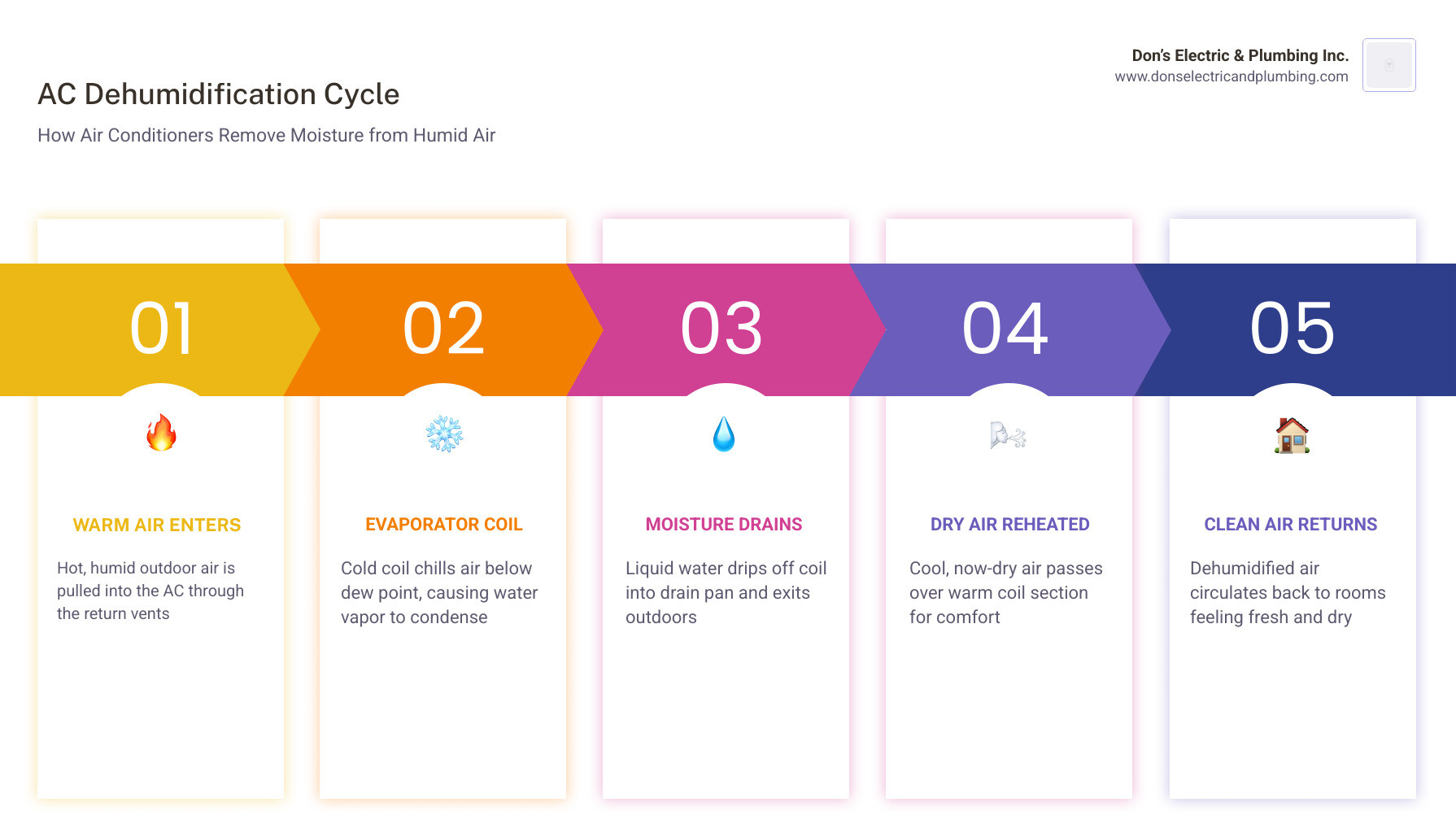
The Unique Challenges of Choosing an AC for Humid Northeast Summers
In our corner of New York, from Canajoharie to Sharon Springs, summer humidity isn’t just a comfort issue; it’s a structural and health challenge. The Northeast is famous for its high dew points—the temperature at which air becomes saturated with water. When the dew point climbs into the 60s or 70s, your air conditioner has to work twice as hard.
One of the biggest hurdles we face is moisture infiltration. Many of our local homes in Montgomery and Schoharie counties were built decades ago, long before modern vapor barriers and airtight seals were standard. Humid air seeps in through basements, crawl spaces, and older window frames. If your cooling system isn’t up to the task, you’ll experience “short cycling.” This happens when an AC unit cools the room temperature so quickly that it shuts off before it has a chance to pull the moisture out of the air. You’re left with a house that is 70°F but feels like a swamp.
When you are looking for AC installation services in Canajoharie, it is vital to distinguish between sensible heat and latent heat. Sensible heat is what changes the number on your thermostat. Latent heat is the energy stored in water vapor. In a typical Northeast summer, a massive portion of your AC’s energy is spent on that latent load.
| Feature | Sensible Heat Load | Latent Humidity Load |
|---|---|---|
| Source | Sunlight, appliances, people | Outdoor air, cooking, showers, breath |
| AC Action | Lowers air temperature | Condenses water on coils |
| Result of Failure | Room feels “hot” | Room feels “clammy/sticky” |
| Ideal Fix | Higher BTU capacity | Longer run times/Variable speed |
Selecting the Right System Type for Maximum Dehumidification
Not all air conditioners are created equal when it comes to drying out a room. If you are currently dealing with sticky floors or foggy windows, it might be time to look at an AC service in Canajoharie to evaluate if your system type is a mismatch for our climate.
For maximum moisture removal, we often recommend systems with two-stage or variable-speed compressors. Traditional “single-stage” units are either 100% on or 100% off. They blast cold air, hit the target temperature, and quit. Variable-speed systems, however, can throttle down to 30% or 40% capacity, running for longer periods at a lower speed. This constant, gentle airflow allows the evaporator coil to stay cold longer, pulling significantly more water out of the air.
Why variable-speed technology is vital for choosing an ac for humid northeast summers
When choosing an ac for humid northeast summers, variable-speed technology is the “secret sauce.” Because these units don’t cycle on and off abruptly, they maintain a much more consistent indoor environment.
Think of it like a car: a single-stage AC is like a driver who only knows how to floor the gas or slam the brakes. A variable-speed unit is like a cruise control system that adjusts to the terrain. This leads to:
- Enhanced Comfort: No more “cold-then-warm” swings.
- Superior Dehumidification: Longer cycles mean more time for water to condense and drain away.
- Energy Efficiency: Modern units with high SEER2 ratings use significantly less electricity, and we can help you navigate AC repair in Canajoharie if your older unit is losing its efficiency.
Comparing central air and ductless options for older homes
For many homeowners in areas like Little Falls or Broadalbin, the question isn’t just “which AC” but “how do I get it in my house?” Many historic Northeast homes lack the ductwork required for traditional central air.
Ductless mini-splits are an incredible alternative. They offer localized cooling and zoning flexibility, meaning you can keep the bedroom bone-dry and cool while saving energy in the kitchen. If you have questions about how these fit into your specific home layout, our HVAC system FAQ covers many common concerns regarding installation in older structures.
Sizing and Efficiency Specs for New York Climates
In HVAC, bigger is definitely not better. This is the most common mistake we see homeowners make. If you buy a 5-ton unit for a house that only needs 3 tons, that unit will reach the temperature setting in ten minutes and shut off. The air will be cold, but the humidity will remain at 70%.
To get it right, we perform a Manual J load calculation. This isn’t just a guess based on square footage; it accounts for:
- The R-value of your insulation.
- The orientation of your home (west-facing windows get much more afternoon heat).
- The type of glass in your windows.
- The number of occupants.
How to properly size a unit when choosing an ac for humid northeast summers
When you schedule an estimate, we look at your home as a complete system. In a humid climate like Montgomery County, we want a unit that is sized precisely to run long enough to dehumidify without overworking.
We also look at SEER2 (Seasonal Energy Efficiency Ratio) ratings. While the minimum required rating is now 13, the most efficient units on the market reach between 16 and 23. You can use our SEER energy savings calculator to see how much a higher-efficiency unit could save you over the life of the system.
Maintenance and Lifestyle Tips to Reduce Humidity Load
Even the best AC unit needs a little help. In the humid Northeast, moisture is always trying to find a way in. Proper maintenance is the first line of defense. A dirty filter or a clogged evaporator coil reduces airflow, which prevents the system from removing moisture effectively.
We recommend checking your filters every month during the peak summer season. Additionally, you should sign up for an HVAC maintenance plan to ensure your coils are cleaned and your refrigerant levels are correct. If your airflow drops below the recommended 400 to 425 CFM (cubic feet per minute) per ton, your AC simply won’t be able to handle the humidity.
The role of whole-home dehumidifiers and smart thermostats
If your home has a damp basement or if you live in a particularly low-lying area of the Mohawk Valley, a central AC might not be enough on its own. This is where a whole-home dehumidifier comes in. These systems integrate directly with your HVAC ductwork to pull out gallons of water per day without lowering the temperature of the house.
To manage all this technology, a smart thermostat is a game-changer. It allows you to monitor indoor humidity levels remotely. Ideally, you want to keep your indoor humidity between 30% and 50%. Anything higher encourages mold; anything lower can lead to dry skin and respiratory issues. Check our HVAC specials and rebates to see if there are current incentives for upgrading to smart, moisture-sensing controls. If you’re having trouble with your current settings, our HVAC troubleshooting guide can help you identify if the problem is your thermostat or the unit itself.
Frequently Asked Questions about Northeast Air Conditioning
What is the ideal thermostat setting for a humid summer?
According to Energy Star and the Department of Energy, 78°F is the “sweet spot” for balancing comfort and cost. While that might sound high, if your AC is properly dehumidifying, 78°F with 45% humidity feels much cooler than 72°F with 70% humidity. You can save about 3 percent on your utility bill for every degree you raise the set temperature. If you need more tips on efficiency, visit our HVAC system FAQ.
How do I know if my AC is struggling with humidity?
Look for the “sticky house” signs:
- Foggy Windows: Condensation on the inside of your glass.
- Musty Odors: That “old basement” smell in your living room.
- Clammy Skin: Feeling like you need a shower even when you’re sitting still.
- Sticky Floors: Wood or tile floors that feel slightly tacky underfoot.
Can a heat pump handle New York humidity in 2026?
Absolutely. Modern cold-climate heat pumps are designed for the radical swings of New York weather. In April 2026, the technology has reached a point where these systems provide exceptional dehumidification in the summer and reliable heat even when the Mohawk Valley freezes in the winter. Because they are almost always variable-speed, they are actually among the best options for moisture control.
Conclusion
Choosing an AC for humid Northeast summers doesn’t have to be an overwhelming task. By focusing on variable-speed technology, proper sizing through Manual J calculations, and consistent maintenance, you can transform your home into a crisp, dry sanctuary.
At Don’s Electric & Plumbing Inc., we’ve been helping our neighbors in Montgomery, Schoharie, Fulton, and Herkimer counties stay comfortable since 1984. As a family-owned and operated business, we stand behind our work with a 100% satisfaction guarantee. Whether you need emergency repairs in the middle of a July heatwave or you’re planning a brand-new AC installation in Canajoharie, we have the expertise and the financing options to make it happen.
Don’t let the humidity win this summer. Give us a call today and let’s find the perfect cooling solution for your home.