


Is Your Electrical System Safe for Modern Appliances? Here’s What Every Homeowner Should Know
Is your electrical system safe for modern appliances? The honest answer for many homes — especially older ones — is: probably not without an inspection. Here’s a quick way to assess where you stand:
Quick Safety Check:
| Warning Sign | What It Likely Means |
|---|---|
| Breakers tripping frequently | Circuit is overloaded |
| Lights flicker when appliances start | Insufficient capacity or aging wiring |
| Outlets feel warm or buzzing | Loose connections or overloaded circuit |
| Burning smell near panel or outlets | Serious hazard — act immediately |
| You rely on power strips everywhere | Not enough circuits for modern load |
| Panel is 25+ years old | May not meet today’s safety standards |
| Home has 100 amps or less | Likely undersized for modern demands |
If two or more of these apply to your home, your electrical system deserves a closer look.
Today’s homes run on more power than ever before. In 2026, a typical household might include a smart refrigerator, an induction cooktop, a home office setup, a gaming computer, and — increasingly — an EV charger in the garage. Each of those devices draws real power. And when they all run at once, the strain on an older electrical system can go from manageable to dangerous fast.
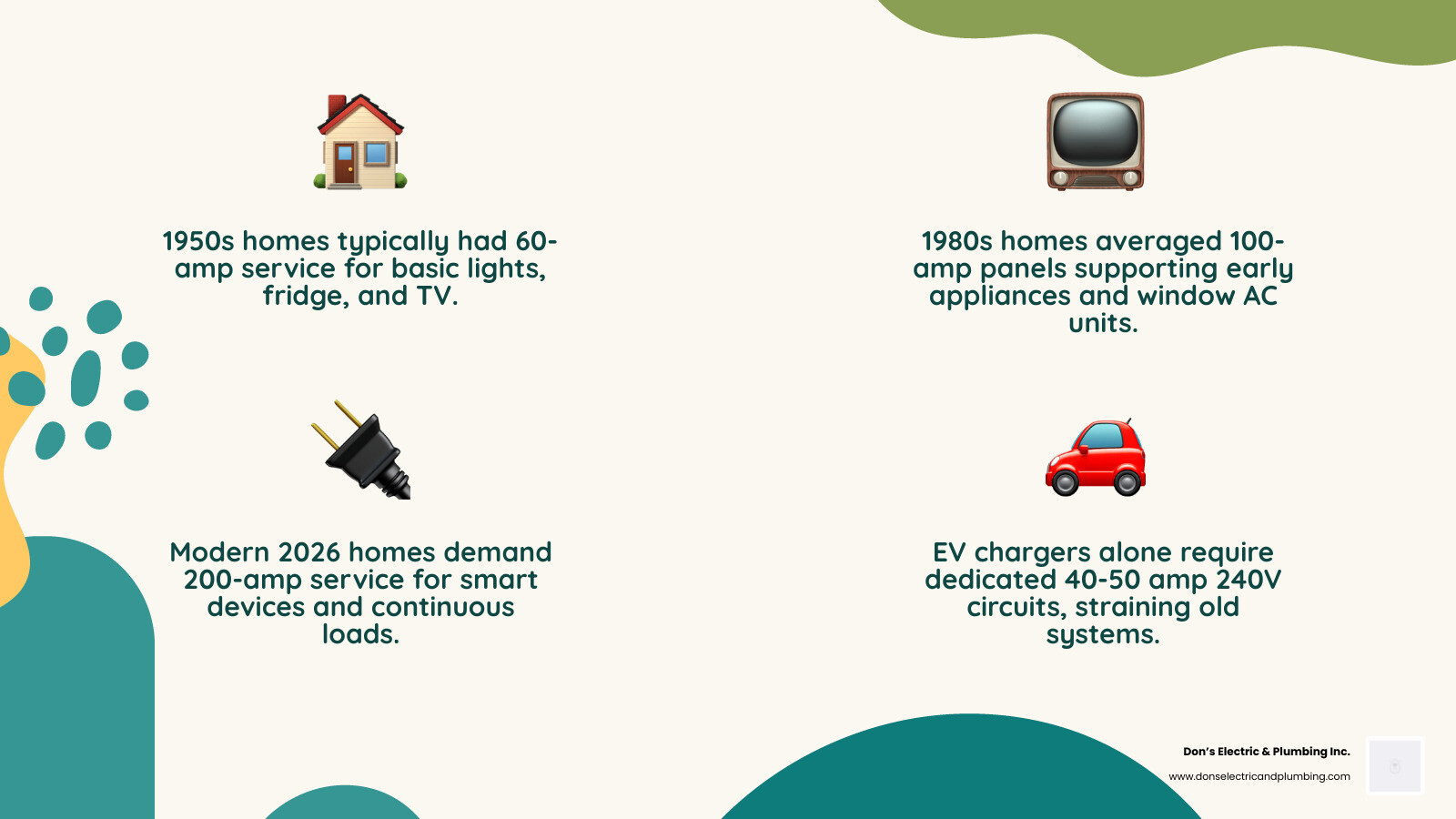
The problem is that most homes built before the 1980s were designed for a much simpler electrical life — maybe a few lamps, a refrigerator, and a television. Electrical service of 60 to 100 amps was the standard then. Modern households routinely need 150 to 200 amps or more. That gap between what your system was built for and what you’re actually asking it to do is where safety risks hide.
At Don’s Electric & Plumbing Inc., we’ve been helping homeowners across Canajoharie, Cobleskill, and the surrounding counties of Schoharie, Montgomery, and Fulton navigate exactly these kinds of concerns since 1984. Whether you’re plugging in a new appliance or planning a bigger home upgrade, understanding your electrical system’s limits is the first step toward keeping your family safe.
Why are my lights flickering when I use the microwave?

Have you ever noticed your kitchen lights dim for a split second when the microwave starts? Or perhaps the living room lamps pulse when the vacuum cleaner kicks on? These aren’t just quirks of an “old house personality.” They are clear signals that your electrical system is struggling to keep up with the demand.
The Phenomenon of “Load Creep”
In our decades of experience serving Montgomery and Fulton Counties, we’ve seen a pattern called “load creep.” It happens slowly. You buy a new air fryer (which can draw a staggering 1800W), then a high-end gaming PC for the kids (500W+), and maybe a portable space heater for that chilly guest room. Individually, they seem fine. Collectively, they push your circuits to the breaking point.
When your lights flicker, it’s often because a high-draw appliance is pulling so much current that it causes a momentary voltage drop on the circuit. If this is happening frequently, it means your wiring is being pushed to its thermal limits.
Warning Signs You Shouldn’t Ignore
If you’re wondering is your electrical system safe for modern appliances, look for these “Tier 2” warning signs that indicate a more urgent problem:
- Buzzing or Sizzling Sounds: If you hear a faint crackling or buzzing near an outlet or switch, stop using it immediately. This is often the sound of electricity “arcing” — jumping across a loose connection.
- Burning Smells: An electrical fire often smells like burning plastic or ozone. If you catch a whiff of something “hot” near your panel, it’s time for electrical repairs.
- Warm Cover Plates: Outlets and switches should never be warm to the touch. Heat is a byproduct of resistance, and high resistance in an old circuit is a leading cause of residential fires.
- Power Strip Reliance: If your walls are a “nest” of extension cords and power strips, your home lacks the necessary number of outlets and circuits for modern life. Extension cords are for temporary use, not permanent infrastructure.
Determining if your electrical system is safe for modern appliances
So, how do you move from “guessing” to “knowing”? Determining your home’s capacity involves a bit of math and a lot of professional observation.
The 80% Capacity Rule
One of the most important safety standards we use is the “80% Rule.” For a continuous load (anything running for three hours or more), your electrical system should never exceed 80% of its rated capacity. For example, if you have a 200-amp panel, your maximum safe continuous load is 160 amps.
Older homes in areas like Palatine or Minden often only have 60-amp or 100-amp service. In 2026, 60 amps is barely enough to run a modern kitchen, let alone a whole house.
Calculating Your Current Load
To see where you stand, you can do a rough estimate:
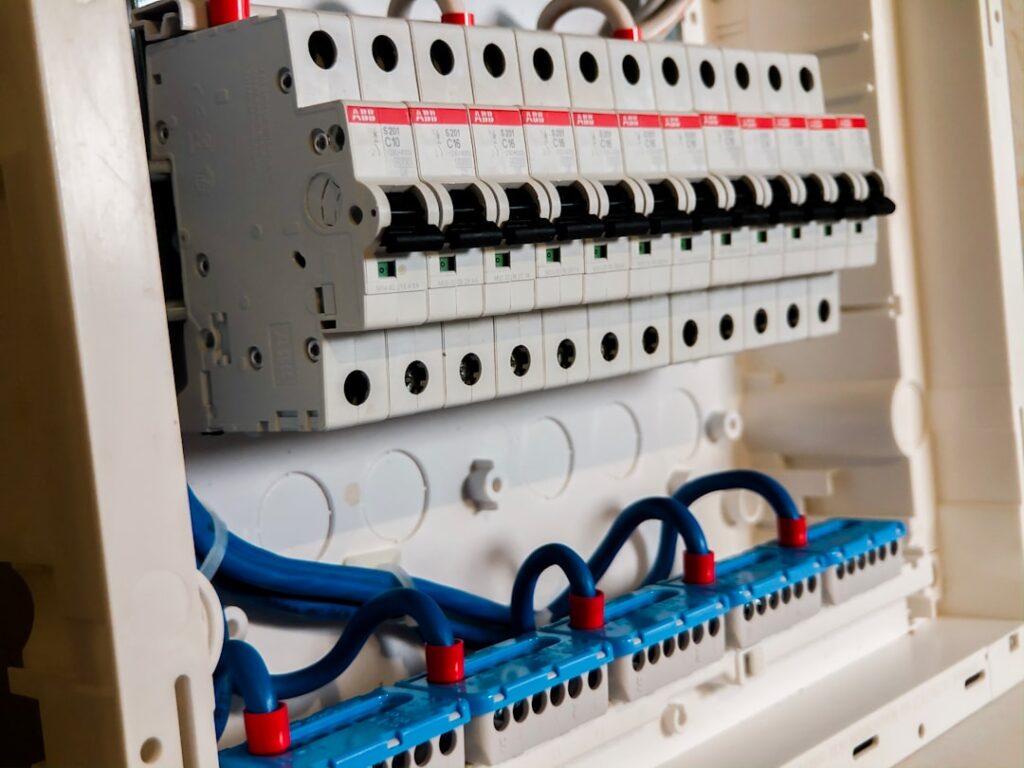
- Check your panel amperage: Look for the main breaker at the top of your panel. It will usually be stamped with a number like 100, 150, or 200.
- Identify major draws: High-power appliances like electric ranges (30-50 amps), water heaters (30 amps), and central AC units (20-30 amps) take up the lion’s share of your capacity.
- Factor in new additions: If you are planning an AC installation, that new system will require its own dedicated circuit and a significant chunk of your panel’s “budget.”
Why Dedicated Circuits Matter
Modern high-power appliances — including induction cooktops, EV chargers, and even some high-end dishwashers — require dedicated circuits. This means the wire runs directly from the breaker to that single appliance. If you’re trying to run a new, high-efficiency refrigerator on a circuit shared with a toaster and a coffee maker, you’re asking for a tripped breaker.
What upgrades do I need for a high-tech home in Canajoharie?
Living in a beautiful historic home in Schoharie or Montgomery County doesn’t mean you have to live with 19th-century power. Upgrading your system is about more than just “more power”; it’s about modern safety features that didn’t exist when your home was built.
Comparing the Load: Then vs. Now
It’s fascinating to see how much our power needs have changed. Take a look at this comparison:
| Appliance Type | Vintage Wattage (approx.) | Modern Wattage (approx.) |
|---|---|---|
| Refrigerator | 350W (Standard) | 150W (Efficiency) / 800W (Smart Features) |
| Cooking | 800W (Toaster) | 1800W+ (Air Fryer / Pressure Cooker) |
| Entertainment | 300W (CRT TV) | 120W (LED) / 600W (Gaming PC + Dual Monitors) |
| Climate Control | N/A (Fans) | 3500W+ (Central Air / Heat Pump) |
While some items like TVs have become more efficient, we now have many more of them, and our kitchen gadgets have become incredibly power-hungry.
Essential Modern Safety Features
When we perform an electrical installation or upgrade, we focus on three main pillars of safety:
- AFCI (Arc-Fault Circuit Interrupters): These breakers detect dangerous electrical arcs (sparks) caused by damaged wires and shut off the power before a fire starts.
- GFCI (Ground-Fault Circuit Interrupters): Essential for kitchens, bathrooms, and outdoors, these protect you from electric shock by sensing current leaks.
- Proper Grounding: Many older homes (pre-1950s) use “two-prong” outlets that lack a ground wire. This is dangerous for modern electronics, which need that ground path to discharge excess electricity safely.
Outdated Wiring Types to Watch For
If your home was built before 1975, you might have wiring that is fundamentally incompatible with modern life:
- Knob-and-Tube: Found in homes built before 1950. It lacks a ground wire and uses air for cooling. If you’ve added modern insulation over it, you’ve created a fire hazard.
- Aluminum Wiring: Common in the late 60s and early 70s. Aluminum expands and contracts differently than copper, leading to loose connections and potential fires. In fact, homes with aluminum wiring can be 55 times more likely to reach fire hazard conditions.
If you are planning a furnace installation or adding a heat pump, these older wiring types often need to be addressed first to ensure the new equipment operates safely and efficiently. We also recommend looking into modern lighting services to switch to LED fixtures, which can help reduce the overall load on your system.
Frequently Asked Questions about Home Electrical Safety
Is your electrical system safe for modern appliances like EV chargers?
Electric Vehicle (EV) chargers are one of the most significant loads you can add to a home. They typically require a dedicated 240V circuit and can draw 30 to 50 amps for several hours at a time. Most older 100-amp panels cannot safely support an EV charger alongside existing household loads. A professional inspection is mandatory before installation to determine if a “heavy-up” (panel upgrade) is required.
How do I know if my electrical system is safe for modern appliances in an older home?
Start with a visual check. If you see a fuse box (with screw-in glass fuses) instead of a circuit breaker panel, your system is likely 60-80 years old and undersized. Also, look for the amperage rating on your main breaker. If it says “60” or “100,” you are likely at or over capacity for a modern household. Frequent breaker trips are the most common “active” sign that your system is overloaded.
When is the best time to upgrade my electrical panel in Cobleskill?
The best time is before you have a crisis. Ideally, you should upgrade during any major renovation, when you are adding a large appliance (like a hot tub or a new HVAC system), or if your panel is more than 25-30 years old. Upgrading your panel not only improves safety but also increases your property value and ensures your home is ready for future technologies like solar panels or smart home automation.
Conclusion
At the end of the day, your home’s electrical system is the invisible engine that drives your modern life. Whether you’re in Canajoharie, Broadalbin, or Sharon Springs, you deserve to know that when you plug in your devices, your family is safe from the hidden risks of outdated wiring.
Don’s Electric & Plumbing Inc. has been a family-owned and operated pillar of the community since 1984. We take pride in serving Montgomery, Schoharie, and Fulton Counties with a 100% guarantee on our work. From emergency 24/7 service to flexible financing options, we’re here to help you bridge the gap between your home’s vintage charm and today’s high-tech demands.
Don’t wait for a burning smell or a tripped breaker to tell you there’s a problem. Schedule your electrical safety inspection in Canajoharie today and let us give you the peace of mind that your home is ready for the future.