


Is Your Electrical Project Safe to DIY — or Time to Call a Pro?
Knowing when to call an electrician vs diy can be the difference between a quick fix and a house fire. Electrical mistakes cause over 50,000 home fires every year in the U.S., resulting in roughly 500 deaths and $1.3 billion in property damage. That’s not meant to scare you — it’s meant to help you make a smart call before you pick up a screwdriver.
Here’s a fast answer to help you decide:
| Task | DIY Safe? |
|---|---|
| Changing a light bulb | Yes |
| Replacing an outlet or switch cover plate | Yes |
| Resetting a tripped breaker (once) | Yes |
| Installing battery-powered smoke detectors | Yes |
| Replacing a light fixture (same wiring, power off) | Proceed with caution |
| Adding a new circuit or outlet | No — call a pro |
| Upgrading your electrical panel | No — call a pro |
| Installing an EV charger or generator | No — call a pro |
| Troubleshooting burning smells or buzzing outlets | No — call a pro immediately |
| Any work inside the breaker panel | No — call a pro immediately |
The simple rule: If a task involves new wiring, your main panel, or anything you’re not 100% sure about — stop and call a licensed electrician.
Most homeowners want to save money, and that makes total sense. But electrical systems are not like painting a wall or fixing a leaky faucet. A bad connection hidden inside a wall can smolder for hours before igniting. And if that fire traces back to unlicensed work, your homeowner’s insurance may deny the claim entirely.
This guide breaks down exactly which tasks are safe to handle yourself, which ones always need a pro, and what warning signs should make you pick up the phone right now.
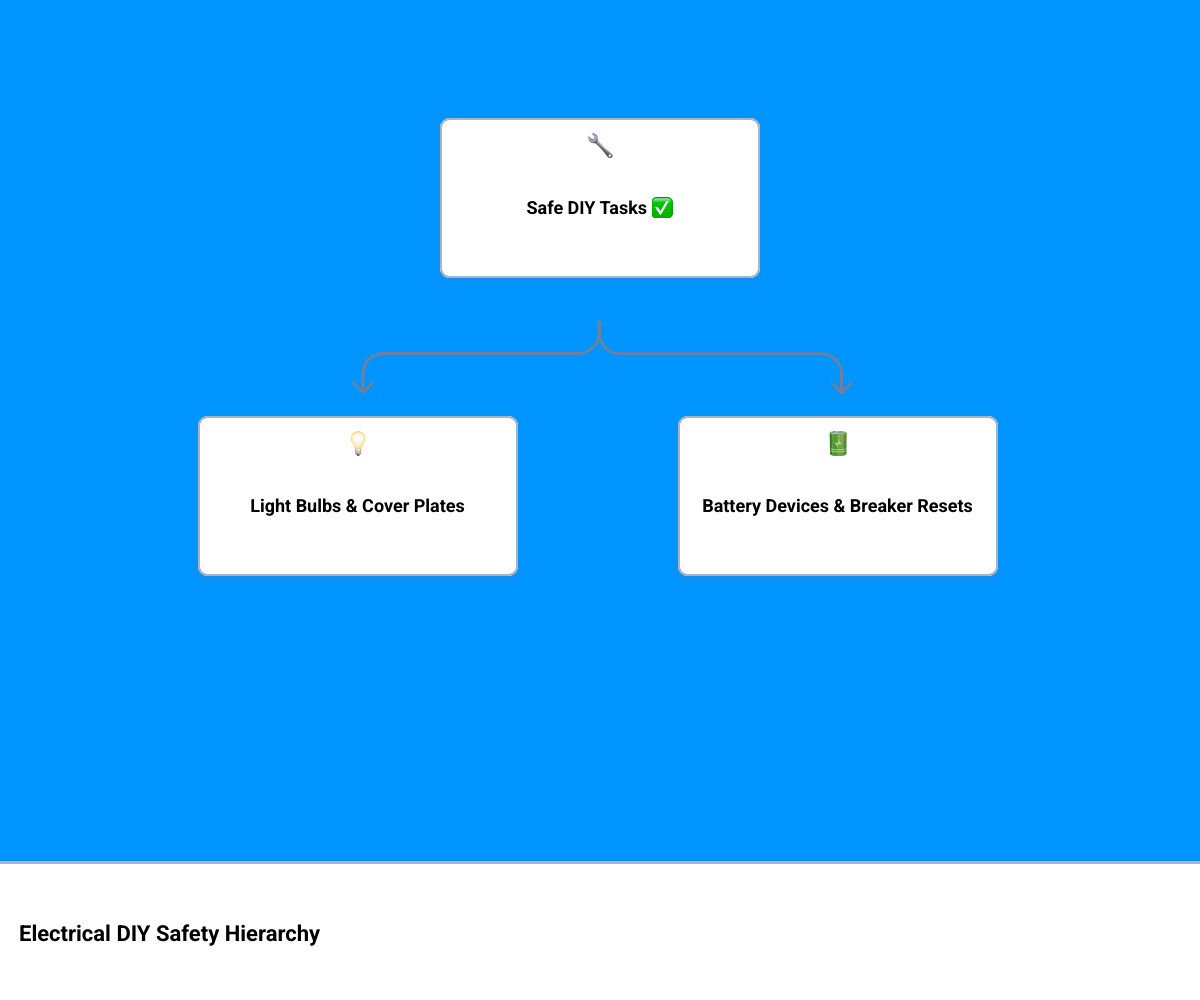
When to Call an Electrician vs DIY: The Safety Threshold
At Don’s Electric & Plumbing Inc., we’ve seen plenty of “weekend warrior” projects in Canajoharie and Montgomery County that started with good intentions but ended in a frantic emergency call. The threshold for safety isn’t just about your confidence; it’s about the physics of electricity.
When you are deciding when to call an electrician vs diy, you have to consider the “invisible” dangers. Unlike a plumbing leak that you can see or a squeaky floorboard you can hear, electrical faults are often silent and odorless until they reach a flashpoint.
Understanding the Risks: Voltage and Arcing
Standard home outlets carry 120 volts, which is more than enough to stop a human heart. Furthermore, “arcing”—where electricity jumps through the air between loose connections—is a leading cause of residential fires. This heat can exceed 10,000 degrees Fahrenheit, melting insulation and igniting wooden studs inside your walls.
For residents in Sharon Springs or Middleburgh, keeping your home safe means recognizing that More info about electrical services provided by a licensed professional ensures that every connection is torqued to spec and every circuit is balanced.
Simple Electrical Tasks Generally Safe for DIY
There are absolutely things you can do yourself without calling us! We want you to feel empowered in your home. These tasks generally don’t involve touching live wires or modifying the home’s infrastructure:
- Changing Light Bulbs: Always ensure the wattage matches the fixture’s rating to prevent overheating.
- Replacing Cover Plates: Swapping out a plastic outlet or switch plate for a decorative one is a simple aesthetic upgrade.
- Battery-Operated Devices: Installing battery-powered smoke alarms or carbon monoxide detectors is a great DIY project.
- Resetting a Breaker: If a hair dryer trips a breaker, it’s perfectly safe to flip it back to “on” once. However, if it trips again immediately, stop. That’s a sign of a short circuit or an overloaded line.
Complex Projects That Always Require a Professional
Some jobs are simply non-negotiable. If you find yourself staring at a project that requires a permit or involves the “guts” of your home, it’s time to look at More info about electrical installation.
- Panel Upgrades: Your breaker box is the heart of your home. Working inside it exposes you to the main service lugs, which are always “hot” and can cause a fatal arc flash.
- New Circuits: Adding a dedicated line for a basement freezer in Cobleskill or a workshop in Palatine requires calculating load capacity to ensure you don’t overwhelm the main bus bar.
- EV Chargers and Generators: These high-voltage installations require specific wire gauges and specialized breakers. A mistake here can fry your expensive vehicle or backfeed electricity into the grid, endangering utility workers.
- Aluminum Wiring: Common in some older homes in our area, aluminum requires special connectors. Mixing it with standard copper devices is a major fire hazard.
Critical Warning Signs You Need an Electrician Immediately
Sometimes, the house tells you exactly when it’s time to stop the DIY approach. If you notice any of the following, don’t wait for the weekend—call a professional immediately.
- Burning Smells: An electrical fire often smells like fish, burning plastic, or an ozone-like chemical scent. If you can’t find the source, it’s likely behind the drywall.
- Buzzing or Sizzling: Outlets and switches should be silent. A hum or a “crackling” sound indicates electricity is arcing between loose wires.
- Warm Outlets: If an outlet faceplate is warm to the touch, the wires behind it are overheating. This is a massive red flag.
- Flickering Lights: While a single flickering bulb might just be loose, lights that dim across multiple rooms when the fridge kicks on suggest a serious issue with your neutral wire or panel capacity. Check out More info about lighting services to diagnose these gremlins.
The Hidden Risks of Improper DIY Electrical Work
The danger of DIY isn’t just a physical shock; it’s the long-term financial and legal fallout. In places like Little Falls and Sharon, building codes are strictly enforced for a reason.
Insurance Denial
This is the one that catches people off guard. If a fire occurs and the fire marshal determines it started at a DIY-installed outlet that didn’t have a permit, your insurance company has a legal loophole to deny your claim. You could be left paying for a total home rebuild out of your own pocket.
Code Violations and Home Resale
When you go to sell your home in Montgomery or Schoharie County, a home inspector will look at your electrical system. Messy wiring, missing GFCI outlets in kitchens, or unpermitted panel work can derail a sale. You’ll often end up paying a professional more to “fix” your DIY work than it would have cost to do it right the first time.
When to Call an Electrician vs DIY for Legal Compliance and Permits
Most electrical work in New York requires a permit and a subsequent safety inspection. This ensures the work meets the National Electrical Code (NEC). For example, if you are doing a renovation that involves More info about AC installation, the electrical feed to that unit must be inspected to ensure it can handle the startup amperage. Hiring us means we handle the paperwork, the permits, and the inspections, protecting your liability.
Essential Safety Precautions for Minor Home Repairs
If you are tackling a “safe” DIY task, like replacing a single light switch with a dimmer, you must follow these rules. No exceptions.
- Shut Off the Power: Never trust the wall switch. Go to the breaker panel and flip the circuit off.
- Test, Then Test Again: Use a non-contact voltage tester. Hold it up to the wires after you’ve flipped the breaker to ensure no electricity is flowing.
- Use Insulated Tools: Use screwdrivers and pliers with rubber-coated handles designed for electrical work.
- Wear Rubber-Soled Shoes: This adds a layer of resistance between you and the ground, reducing the risk of a fatal shock if something goes wrong.
Frequently Asked Questions about Electrical DIY
Is it truly cheaper to DIY electrical work?
Initially, it looks cheaper because you aren’t paying for labor. However, once you factor in the cost of professional-grade tools (multimeters, wire strippers, torque screwdrivers) and the potential for damaging expensive appliances, the “savings” evaporate. If a mistake leads to a fried control board during a More info about furnace installation, the repair cost will be significantly higher than a standard electrical service call.
Can I change my own outlets and switches?
If you are doing a “like-for-like” replacement (replacing an old 3-prong outlet with a new 3-prong outlet), it is generally manageable for a handy homeowner. However, you must ensure the grounding wire is securely attached. If you see only two wires (no ground) or if you are trying to install a GFCI outlet for the first time, call us. GFCIs are complex and must be wired in a specific “line and load” configuration to work correctly.
Does DIY electrical work void my home insurance?
In many cases, yes. Most policies require that “major systems” (electrical, plumbing, HVAC) be maintained by licensed professionals. If unpermitted work leads to property damage, the insurance company may argue that you increased the risk through negligence, leaving you with a denied claim.
Conclusion
At the end of the day, your home is your sanctuary. Whether you’re in Canajoharie, Sharon Springs, or Little Falls, Don’s Electric & Plumbing Inc. is here to ensure that sanctuary stays safe. We are a family-owned and operated team that has been serving our neighbors since 1984.
We offer a 100% guarantee on our work, emergency services for when things go “bump” in the night, and financing options to help you get those necessary upgrades done without stress. Don’t be a hero when it comes to high voltage—it’s just not worth the risk.
Ready to make sure your home is up to code? Schedule an estimate for your next project today and get the peace of mind that only comes from professional expertise.